the best search whatever u want!

Google
 

signup 2 earn money by google

download mozilla firefox free

Friday, August 31, 2007

Extreme airport on the island of Saba in the Netherlands


COMPUTER HISOTRY OF WORLD

join my group


Computer History of the World

In the beginning, God created the Bit and the Byte. And from those he created the Word.

And there were two Bytes in the Word; and nothing else existed. And God separated the One from the Zero; and he saw it was good.

And God said - Let the Data be; And so it happened. And God said - Let the Data go to their proper places. And he created floppy disks and hard disks and compact disks.

And God said - Let the computers be, so there would be a place to put floppy disks and hard disks and compact disks. Thus God created computers and called them hardware.

And there was no Software yet. But God created programs; small and big... And told them - Go and multiply yourselves and fill all the Memory.

And God said - I will create the Programmer; And the Programmer will make new programs and govern over the computers and programs and Data.

And God created the Programmer; and put him at Data Center; And God showed the Programmer the Catalog Tree and said You can use all the volumes and subvolumes but do not use Windows.

And God said - It is not good for the programmer to be alone. He took a bone from the Programmer's body and created a creature that would look up at the Programmer; and admire the Programmer; and love the things the Programmer does; And God called the creature: the User.

And the Programmer and the User were left under the DOS and it was Good.

But Bill was smarter than all the other creatures of God. And Bill said to the User - Did God really tell you not to run any programs?

And the User answered - God told us that we can use every program and every piece of Data but told us not to run Windows or we will die.

And Bill said to the User - How can you talk about something you did not even try. The moment you run Windows you will become GENIOUS. You will be able to create anything you like by a simple click of your mouse.

And the User saw that the fruits of the Windows were nicer and easier to use. And the User saw that any knowledge was useless--since Windows could replace it.

So the User installed the Windows on his computer; and said to the Programmer that it was good.

And the Programmer immediately started to look for new drivers. And God asked him--What are you looking for? And the Programmer answered--I am looking for new drivers because I can not find them in the DOS. And God said - Who told you need drivers? Did you run Windows? And the Programmer said - It was Bill who told us to!

And God said to Bill - Because of what you did, you will be hated by all the creatures. And the User will always be unhappy with you. And you will always sell Windows.

And God said to the User - Because of what you did, the Windows will disappoint you and eat up all your Resources; and you will have to use lousy programs; and you will always rely on the Programmers help.

And God said to the Programmer - Because you listened to the User, you will never be happy. All your programs will have errors and you will have to fix them and fix them to the end of time.

And God threw them out of the Data Center and locked the door and secured it with a password

10 RULES TO MAKE INDIAN FILM

Two brothers separated in childhood will always grow up on different sides
of the law. The law-breaker, however, will suddenly turn over a new leaf
before the end, bash up the villain (who is the *real* bad guy), and be
pardoned for all his sins before the last-scene family reunion. (This is
possible only if he has a heroine - see rule 2 below).
If the number of heroes is not equal to the number of heroines, the excess
heroes/heroines will a) die b) join the Red Cross and take off to
Switzerland before the end of the movie.
If there are 2 heroes in a movie, they will fight each other savagely for
at least 5 minutes (10 if they are brothers).
Any court scene will have the dialogue "Objection milord". If it
is said by the hero, or his lawyer, it will be overruled. Else, it will be
sustained.
The hero's sister will usually marry the hero's best friend (i.e. the
second hero). Else, she will be raped by the villain within the 1st 30
minutes, and commit suicide.
In a chase, the hero will always overtake the villain, even on a
bullock-cart, or on foot.
When the hero fires at the villain(s), he will never
a) miss
b) run out of bullets. When the villain fires at the hero, he will always
miss (unless the hero is required to die, as in rule 2).
Any fight sequence shall take place in the vicinity of a stack of a) pots
b) barrels c) glass bottles, which will be smashed to pieces.
Any movie involving lost and found brothers will have a song sung by
a) the brothers
b) their blind mother (but of course, she has to be blind in order to regain
her sight in the climax)
c) the family dog/cat.
Police inspectors (when not played by the hero) come in two categories:
a) Scrupulously honest, probably the hero's father - killedby the villain
before the titles.
b) Honest, but always chasing the anti-hero (as in Rule 1), saying "Tum
kanoon se bach nahin sakte", only to pat him in the back in reel 23.
Usually, this inspector's daughter is in love with the anti-hero.
c) The corrupt inspector, (usually the real villain's sidekick)
unceremoniously knocked about by the hero(s) in the climax

1

18 WAYS TO IMPROVE YOUR BODY LANGUAGE

18 ways to improve your body language
1. Don’t cross your arms or legs –
2. Have eye contact, but don’t stare
3. Don’t be afraid to take up some space
4. Relax your shoulders
5. Nod when they are talking
6. Don’t slouch, sit up straight
7. Lean, but not too much –
8. Smile and laugh
9. Don’t touch your face
10. Keep you head up.
11. Slow down a bit
12. Don’t fidget
13. Use your hands more confidently
14. Lower your drink
15. Realise where you spine ends
16. Don’t stand too close
17. Mirror
18. Keep a good attitude

Thursday, August 30, 2007

RAM GOPAL VARMA KE AGG

Ram Gopal Varma Ki Aag'
From the maverick director
Ram Gopal Varma
comes the much publicized film
that is said to be the remake of the cult classic Sholay ,
that was earlier titled Ram Gopal Varma Ki Sholay ,
but now, due to legal hassles,
has been renamed as 'Ram Gopal Varma Ki Aag'.

In the dark underbelly of Mumbai City
a nihilistic new leader has risen to rule the fetid underworld.
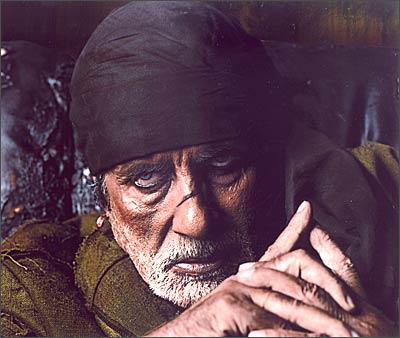
His name is Babban Singh played by
Bollywood mega superstar Amitabh Bachchan.
Cruel beyond imagination,
psychotically violent and far more devious than
any gangster the city has ever known.
Babban perceives other human beings as objects
to amuse or occupy him with.
When he speaks, he does so to voice his own thoughts.
He does not engage in conversation with anyone.
He likes to play with his victims.
When Babban is angry,
his eyes take on a glazed look.
He seems to be looking at you as you speak,
but the focus of his gaze rests in the middle distance.
It's as if he's looking right through you.
He loves people who challenge him,
as then he can enjoy killing them more.

Hirendra Chavan alias Heero (
Ajay Devgan ),
Raj Ranade ( Prashant Raj ) are two young men from Latur,
who arrive in the megapolis of Mumbai
with as big sized dreams of buying out the city.
It's another matter that Heero and Raj are jobless
and don't have enough money even to buy a decent meal.
Childhood friends, their loyalty is absolute with the younger
Raj looking up to the elder Heero.

Portrayed by Malayalam superstar
Mohanlal,
Narsimha's eyes retain composure at all times.
Dark circles collected over sleepless nights betray
the fact he is a man tormented by his own past.
Nobody has ever seen Babban and if they did,
they didn't survive to tell the tale.
But one man believed in his existence.
And that is inspector Narsimha,
an encounter specialist who has
a single-minded determination to finish Babban.
His thoughts have single point of focus: Babban.

Former Miss Universe
Sushmita Sen is Durga Devi
รข€“ a trained nurse her life blossomed when love happened...
and then tragedy struck. Stoic, dignified, silent,
her demeanor hid an inner strength that at times
raised itself beyond what one would expect from a woman.

Sex-bomb
Nisha Kothari is Ghungroo,
who drives a 'rickshaw' named 'Laila'.
Laila is her best friend and confidante.
Ghungroo is Mumbai city's only woman rickshaw driver.
She knows all the shortcuts in Mumbai city.
She talks switching between Marathi, Hindi and English.
She'd like you to believe she's a man.
But deep inside, she is all woman.

Within a week of their arrival
on the recommendation of an old acquaintance
of theirs called Soorma ( Rajpal Yadav )
who runs a dance bar, Heero and Raj find work
with Shambhul Seth,
a criminal with heavy underworld connections
and also high on the police scanner.

In his pursuit of Shambhul, Inspector Narsimha
comes into contact with Heero and Raj.
On meeting them, he realizes
that these were no hardened criminals.
Small time hoodlums, perhaps,
but deep inside their values were still intact.
He chose to appeal to the honesty in them.

Inspector Narsimha exposes
Heero and Raj to Shambhul's criminal past,
who are surprised by this.
They agree to help in whatever way they could.
The inspector in the process of trying to get Shambhul
got into a deadly trap and both Heero and Raj in a show
of extraordinary courage and strength managed to
rescue him and managed to finish off Shambhul Seth.
But in the bargain, Heero and Raj are arrested
as well for associating with a criminal and for a while went to jail.

Much later, when Inspector Narsimha needs help
in his hunt for Babban Singh,
his brief impression of Heero and Raj returns to him.
Since Inspector Narsimha cannot expect
the police to help in a quest for personal revenge,
and his principles would not allow
him to turn to the underworld for help,
he decides to enlist the help of Heero and Raj.

How Inspector Narsimha takes his revenge
on Babban Singh with the help of Heero and Raj then forms the crux of the story.

Though the film is widely conceived to be a remake of 'Sholay',
Ram Gopal Varma gives his own interpretation
to the film that is regarded as the Bible of Hindi cinema.
And true to his nature,
Ramu doesn't cease to surprise and says
he has changed many things in his
modern version of 'Sholay' like the title itself
and also the names of the characters.

Thakur in 'Sholay' has become Narsimha in Ramu's movie .
Radha has become Durga, Basanti has become Ghungroo,
Veeru has become Heero and Jai has become Raj,
Gabbar Singh will be called Babban Singh.
Apart from the names,
the characters themselves would be different.
Babban, for instance, will have much larger footage in the film
Also, he would be more vengeful, almost like a psychopath.
Instead of chopping Narsimha's nds, Babban
only cuts his fingers.
Durga has a muted aggression in her character.
She is clad in black, and has suppressed anger within.
Since the movie is set in Mumbai,
Ghungroo drives an auto rickshaw and not a tonga.
Even the roles played by
Ajay Devgan and Prashant Raj are different.

A major attraction of the film is
Urmila Matondkar
gyrating to the modern version of one of the most famous
dance numbers from Hindi cinema Mehbooba Mehbooba
The promos show the hot looking
Urmila in a sexy, low-neck, red colored outfit shaking
her enormous bust and booty to the techno
composition by choreographer Ganesh Hegde

.

AKSHAY TO STAR OPPOSITE BOND GIRL

Akshay to star opposite Bond girl?


Akshay Kumar is gearing up for his first international venture.


Is it going to be Bond girl Eva Green? The excitement is certainly mounting – not just for Akshay Kumar fans, but for Akshay himself. In his first international film, Akshay could be cast opposite either Salma Hayek, Eva Green or even Jessica Alba.
According to a source, “The producers of Akshay’s new Hollywood film have approached Eva Green who was seen in the James Bond flick Casino Royale and Kingdom of Heaven. Also, they have sent feelers to Jessica Alba. ”

Wednesday, August 29, 2007

SOME GIUNESS RECORD

. Highest walk on air balloon.


Mike Howard (Mike Howard) from Britain walked the beam that can extend between two balloons at an altitude of 6522 m. near the city Yovil, County Somersetshir, UK, September 1, 2004 This feat was captured on videotape for the television show "Guinness records : 50 years, 50 of Records."


2. The most stretchable skin.


Harry Turner (Garry Turner) from Britain could spread to the abdominal skin to see 15,8 This is due to a rare disease known as syndrome Elersa- Danlosa violation connective tissue, affecting the skin, ligaments and internal organs. Collagen, strengthens skin, and is responsible for its elasticity, damaged, which, among other things, is the weakening of the skin and joints razboltannost. In more severe cases, this can result in the destruction or rupture of blood vessels, leading to death.


3. The longest dog ears. .


The longest dog ears and see the size 34,9 34,2 cm-right and left, respectively, measured on September 29, 2004 They belong Tiggeru (Tigger), Jr., whose owners Brian and Christine Flessner (Bryan and Christina Flessner) lived in the city of St. Joseph, Illinois.


4. The highest paid attraction in slow decline.


The highest attraction slow fall called "Sky Jump" (Leap from the sky) and is located in the tower and entertainment center crossovers Macau. Fall begins with a 61-level towers at a height of 233 m. over land, and continues for 17-20 seconds. Solemn leap committed A. J. Hackett (A. J. Hackett) from New Zealand on August 17, 2005


5. The heaviest apple.


The heaviest weighing 1,849 kg apple. Chisato raised Iwasaki (Chisato Iwasaki) for its apple farm in the town of Hirosaki (Hirosaki), Japan, which was thwarted by October 24, 2005


6. An old man, who committed lowering a rope.


The oldest person spustivshimsya a rope from a height of more than 30 metres. a britanka Doris Long (Doris Long), which on June 10, 2006 has descend from the building Millgate House-60 m. from the roof to the ground, at the age of 92 years and 24 days (she was born on May 18, 1914). The building is located in an area of St. George in the city of Portsmouth, England.


7. The biggest hamburger, which can be bought.


The biggest hamburger weighing 35.6 kg. included in the menu bar grill Bob's BBQ & Grill on the beach in Pattaya, Thailand on July 31, 2006


8. The largest mirror ball.


The largest mirror ball is 5.01 m. in diameter. Imaginate Events. His boat Nigel Burrows (Nigel Burrows) from the company Imaginate Events. Shaer was demonstrated in the city of Reading, England, October 13, 2006


9. The quickest office.


The quickest office is a table specially equipped to ride on the roads, and moving with a maximum speed of 140 km / h. His boat Briton Edd China (Edd China), and he also has held across Westminster Bridge in London on November 6, 2006 on the Day Guinness World Records.

POOJA BHATT DONT BELIVE IN 15 AUG

I don't celebrate on August 15: Pooja Bhatt

Despite 60 years of freedom from British rule, we Indians still face problems that thwart us from feeling proud of our nationality. Gradually, some of these challenges have even changed the meaning of Independence for us. Some eminent people of tinsel town spoke to us about what Independence means to them.

Pooja Bhatt (Actress, producer, director)
I do not celebrate our Independence on August 15 or January 26. All the 365 days of the year are days of Independence for me. In fact, we Indians are not independent in the real sense.

And most of our failures come from the habit of not sharing each other's problems. If we find anybody in trouble, we stay away and watch from a distance.

We do not bother until and unless our own family, friends or relatives are involved. Is this what we call Independence? Till there is no change in Indians in this regard, Independence is quite meaningless to me.

Firoz Abbas Khan (Director):
What does Independence mean to me? It's really a tough question. Independence is responsible for whatever we are today. Only a confined person can understand the true worth of independence.

Although we are going to celebrate the 60th year of Independence, there still are some hurdles that restrain us from becoming free Indians.

One big issue is that most Indians are still deprived of social and economical freedom. Till we get rid of these obstacles, Independence will remain incomplete for us.

Manoj Bajpayee (Actor):
For me, Independence gets implemented only when the citizen gets the freedom of thought and expression. To me, that is the gist of Independence and I believe only in it.

Rituparna Sengupta (Actress):
Independence Day is a symbol of our strength and pride, earned after the sacrifice of several lives. Obeying the Independence means honouring those immortal people. Life is so fast-paced these days that we don't remember these heroes every day. On August 15 and January 26, we get the opportunity to pay homage to our leaders and pioneers.

Sunny Deol (Actor):
We were not present when India got her independence. Hence, we would not be able to understand its real value now. Back then, our freedom fighters had to fight for it. Now, we take it for granted. We are in the 60th year of our Independence, but frankly speaking, we are not yet independent.

We are living with a "this is how it happens" outlook. Helping somebody is considered another way of accepting problems. Till we understand the meaning of unity and share each-other's problems, we won't get real Independence.

Shefali Chhaya (Actress):
Independence is our basic need. Today, it's impossible to think of a life without freedom. That's why our freedom fighters fought so hard to get our birth right.

To me, freedom of thought and expression is much more important than physical freedom. Freedom of thought allows freedom of dreaming. And only when we dream, will we try to fulfill them.

We are still dealing with problems like corruption, dowry and foeticide in our society. Alhough these are not happening in every home, the exceptions are numerous enough to thwart the development of our country.

Sonali Kulkarni (Actress):
Independence is as important as breathing. At the same time, it's necessary to continue struggling to enjoy freedom.

Although we have been independent for 60 years now, we are still facing social problems, unemployment being the worst, because it's directly connected to one's disposable income.

It's shocking that though we have enough jobs for the entire population, but still all of us can't find suitable work.

The potential of our human resources is immense, but it is not utilized properly. As a result, neither is work being done efficiently, nor are people getting work.

With strong view on corruption, poverty, unemployment, foeticide and Indian Independence, these stars of Bollywood seem to have their feet very much on the Indian soil.

Instead of being immersed in their blessed lifestyle, they think about the problems of the nation. But problems must not weigh us down completely. For every nation has its own set of challenges, progress can be made by finding solutions to them.

Once we Indians unite and set our minds to it, the ending is bound to be happy as are most of our Bollywood films. -Rajnee Gupta

60 YRS OF INDEPENDENCE: CINEMA BOLLYWOOD

60 Years Of Independence: Cinema


Hindi Cinema: From eternity to experimentation. ...


Indian music and cinema has often depicted the Indian society that has changed drastically since the last 60 years. Whether it`s the early 1940`s landlord era or the abolishment of social obstacles, cinema in a way has projected the growth of a great nation. Cinema is not factual life but can easily be called the depiction of the current society.

The impact of the oldest and the largest film industry in the world with over 1200 movies released every year has evolved the Indian society to a much wider horizon. More than 12,000 cinema halls and the growing metro culture in India are taking Indian cinema global to a more appreciable audience.

The fresh achievements of Indians staying overseas and the mounting NRI population have resulted in cross border recognition of Indian cinema. The trend would probably change somewhere again in some time as history shows that cinema is meant to grow with society. Today as we commemorate 60 years of liberated cinema and music, we take a stroll through different eras and generations of Indian cinema that has described the society and even pushed it for the good of mankind.

1940s: Cinema ushered in the epoch of pre-independent and independent India. Prithviraj Kapoor and Dilip Kumar were significant contributors of this phase. Prithviraj Kapoor played the lead role in Sohrab Modi`s Sikander that was an epic based on Alexander the Great`s battle in India. The escalating battles and struggle against the Britishers undoubtedly diverted the film-makers’ mind towards war movies.

Dilip Kumar was unveiled with Jwar Bhata where he starred as a nomadic musician. Another film influenced by the Independence struggle was Dilip Kumar`s Shaheed that displayed martyrdom as an honour. This era remains significant, as it was the stairway for a free film fraternity.

The expression against the British Empire was quite visible in most of the films. Filmmakers did an exceptional job to change the mindset of people towards the building of a great free nation. Other films released during this period were Andaz, Jeet, Sunhere Din, Ratan, Mela, Kismet and Jugnu.


Shaheed: Released in 1948, just a year after Independence, Shaheed was set against the backdrop of the Quit India movement. Shaheed also highlights the extremist actions prevalent in the mid 1940s. It is the story of a young man who sacrifices his life for the country. The film received a massive response as people could connect to the freedom struggle.

Andaz: In this 1949 film, director Meh**** Khan focussed on the youth of 1940s who were aping the western culture. Andaz was undoubtedly Independent India’s modern film, as it showed friendship between two people of the opposite sex, one-sided love and an inkling of emergence of extra marital relationships. In this love triangle, Dilip Kumar suffers the misery of one-sided love and pines for Nargis, who is engaged to Raj Kapoor. Dilip Kumar’s character had grey shades with intentions to snatch Nargis from her fiancรฉ. The film ends with Nargis, a loyal wife, murdering Dilip kumar and being convicted.

1950s: This era was an interlude of Raj Kapoor, Guru Dutt, Dev Anand, Dilip Kumar, Nargis, Prithviraj Kapoor and Meena Kumari. The later part of the decade centered around Sunil Dutt. In 1957, his film Mother India alongside Nargis, became the foremost Indian film to reach the Oscars in the Best Foreign Film category.

The foyer of crime thrillers depicted the need of the hour for the society that was still healing from the scars left by the British. Guru Dutt directed Baazi where Dev Anand played the crucial role. Another significant film of this era was Meena Kumari`s Baiju Bawra that was a musical prodigy on the legend of an Indian dhrupadiya singer. She was well appreciated for her role in Parineeta starring opposite Ashok Kumar.

In the late 1950`s, humour started making its way into the film industry. Kishore Kumar`s Chalti Ka Naam Gadi worked wonders with an Indian society who now wanted to finally laugh after 200 traumatic years of struggle. Hulchul, Aan, Mazi Zameen, Foothpath, Mirza Ghalib, Jagte Raho, Musafir, Sharda, Naya Daur and Kaagaz Ke Phool were some other prominent films of this period. A rustic and rural India was portrayed in this era post independence. The farmers’ struggle and their uprising against the landlords for social equality was a dominant factor.


Awaara: Released in 1951, Awaara was an attempt to showcase the ostentatious yet hollow life in a city. The concept of urban life was new, and city had become synonymous with opportunities, wealth and prosperity. But this is just the tip of the iceberg, as the underbelly of city life has crime, envy, exploitation, and sleaze. The film also shows the plight of the downtrodden, the underprivileged and the rootless in a city. The film was hugely acclaimed, as the troubled people of a partition torn India could very well identify with the vagabond that Raj Kapoor played. The film was also well-liked for its songs, especially the title track “Awaara hoon” which became a kind of an anthem for vagabonds.

Mother India: Another film based on plight of peasants, the film highlighted emergence of women in India as strong characters, breaking away from the shackles of suppression. Nargis stood out as Mother India, who takes the extreme step of gunning down her own son who resorts to becoming a dacoit so as to fight for justice, rather than suffer the cruel practices of the moneylender. Brilliant performance by the stars and strong scripting gave Mother India an edge over its Indian counterparts, and the film went on to bag a nomination in the Oscar Awards as Best Foreign Film.
1960s: Reformation of law and order in the country was the need of the hour. Films like Kala Bazaar and Kanoon spoke about the pathetic law and order due to black-marketing and recurrent robberies. Madhubala`s Barsaat Ki Raat was a super-hit in 1960. Rural India was left behind as India was looked upon as an emerging nation.

Later in the decade, flashing vintage cars and colorful attires were the major highlights as India was slowly but steadily entering the world of fashion. Unbelievably, even the West fashion influence started making its way into Indian fashion as Indian music played an important role in opening the boundaries.

Pandit Ravishankar` s friendship with The Beatles led many great musicians to India`s amusing wide culture heritage. It`s a known fact that George Harrison from the famed Beatles had a guru in Hrishikesh and he preached Lord Krisha in his famous single My Sweet Lord.

The evolution of Western music in India was the result of changing mindset of people owing to an ever growing film industry. Indian cinema produced some great master pieces like Mughal-e-Azam, Sahib Biwi Aur Ghulam, Guide, Jewel Thief, Ram Aur Shyam, Aradhna and Devar(Dharmendra). Production of movies now required less time and music became an internal part of the industry during this period.


Haqeeqat: Set against the backdrop of Indo-China War of 1962, this was perhaps the first film to introduce the genre of war in Hindi films. The film has not only dealt with the mistakes made by the then leaders and as a consequence India’s defeat in the war, but also shows the plight of the soldiers who laid down their lives. Released in 1964, the film ignited patriotism and unity amongst Indians at a time when it was needed the most.

Jewel Thief: This Vijay Anand 1967 blockbuster was made during the time when the West was going gaga over the works of Hitchcock and Fleming. Infact, during this period, Hindi films witnessed a wave of James Bond inspired thrillers, with trademark song and dance sequence. Flamboyant costumes, overtly done hairdos and extended eyeliners were the hot property. Jewel Thief, in its time, made its audience use their gray cells. The period also saw other mind-boggling thrillers as Teesri Manzil and Farz.

1970s: The West influence started capturing the society. Purab Aur Paschim and Hare Rama Hare Krishna showed the other side of the Indian society that experimented with drugs and the hippie culture. This decade was significant in terms of world music that was at its peak with Indian participation in big festivals like Woodstock that was a known haven for Hippies.

On the other hand, the films also portrayed a thin line of division that sadly existed between the rich and the poor class. Rajesh Khanna`s Anand along with Amitabh Bachchan was a big hit throughout the nation. The touching natue of Indian viewers led the movie win laurels, as Rajesh Khanna became a sensation in the country. He followed the act with Kati Patang and Amar Prem.

Raj Kapoor`s Mera Naam Joker was a significant advance as the Indian directors were waking up to more bold films in terms of scripting and film making. Big B who emerged as an angry young man in Zanjeer dominated the later part of the decade. His acting skills, charming looks and onscreen chemistry with Dharmendra led Sholay to be the biggest hit in the film industry.

The decade saw the emergence another superstar in the form of Rishi Kapoor whose on screen chemistry with Dimple Kapadia made them sensations over night. Their debut film Bobby was a super hit as Dimple`s innocent looks with a chunky Rishi Kapoor added glitter on the screen. Reshma and Shera, Seeta Aur Geeta, Abhiman, Bawarchi, Aandhi, Amar Akbar Anthony, Don, Golmaal and Kaala Pathar were other momentous films of this era.


Hare Rama Hare Krishna: This Dev Anand blockbuster opposite Zeenat Aman was released in 1971. Zeenat Aman played the role of a Hippie who was obsessed in smoking chilams and doing drugs. The film depicted the Hippie culture but had a strong anti-drugs message behind it. It also dealt with problems that the youth were facing because of westernization in the country. Asha Bhosle’s single Dum Maro Dum was a massive hit throughout the nation. This film was the turning point in Indian cinema as it managed to express a very controversial issue in an efficient manner owing to excellent screenwriting. Dev Anand decided to make this film after he saw Hippies and their style of living during a trip to Kathmandu.

Sholay:Ramesh Sippy had little idea that this film would forever be remembered as one of the greatest super-hit India has ever produced. The film captivated the audience to such an extent that it ran in theatres for decades. Its remix will soon hit the stands in 2007 in form of Ram Goapl Verma Ki Aag. This film marked the end of dacoits from the Indian society that was once dominated by them. The film left an ever-lasting effect as most of its characters like Gabbar, Kalia, Jai, Veeru, Surma Bhopali and the British jailor became household names in the country. The film showcased the amazing chemistry of friendship between Amitabh Bachchan and Dharmendra. Its songs and dialogues still continue to echo in the Indian Film Industry
1980s: This age belonged to the Angry Young Man concept, with one man moving bravely against injustice. Comedy was getting more and more essential in every film. Namak Halal, Chasme Buddoor, Angoor, Namkeen, Jaane Bhi Do Yaaro, Naukar Biwi Ka and Chaalbaaz were all contributions from this era.

The early part of the decade was dominated with hits like The Burning Train and Disco Dancer. This era saw the emergence of now veterans like Salman Khan with Maine Pyar Kiya, Kamal Hasan and Rishi Kapoor with Sagar and Madhuri Dixit with Tezab.

Anil Kapoor`s Mr India was a magnum opus as fiction united with patriotism and equality of society was well depicted in the movie. Naseeruddin Shah`s Hero Hiralal is another film worth remembering that showed a simple guy falling in love with an affluent girl. The society division between classes started to make its presence felt in Bollywood.


Jaane Bhi Do Yaaro: Kundan Shah directed this motion picture in 1983. The comic representation of a corrupt Indian society was well displayed in this movie. This film will forever be remembered as one of the greatest Bollywood comedies of all time. It presented the dark side of rampant corruption with a hilarious approach. The film had a number of popular actors like Naseerusddin Shah, Satish Shah, Pankaj Kapoor, Ravi Baswani, Vidhu Vinod Chopra, Neena Gupta, Satish Kaushik and Om Puri. The ending was a sarcastic taunt to the crooked Indian politicians. The ending depicted that honesty is no more prevalent in the independent India realm.

Mr India: This can be termed as one of the first fiction Indian film to hit the Box Office. Directed by renowned director Shekhar Kapur, Anil Kapoor acted superbly to raise patriotism and unveil the sad line between the rich and the poor. Amrish Puri’s character as Mogambo won him wide laurels as he established himself as one of the best actors in a villainous role. James Bond’s Dr No influenced the island in the film where Mogambo sets his headquarters. The film sent a strong message against dictatorship as it showcased a common man who is capable enough to safeguard his country.

1990: This was an era of romance! The online chemistry between an actor and actress followed by the `villain concept` was the plot of most films. Mahesh Bhatt`s Aashiqui, Indra Kumar`s Dil, Subhash Ghai`s Saudagar and Sanju Baba’s chemistry with Madhuri in Saajan dominated the early part of the decade.

Soon after the 1993 Mumbai bomb blast, Mani Ratnam`s Bombay was released that remained a controversial film but was a super-hit. The growing infiltration and terrorism threats to India in the later part of the decade and the century led to films like Border, Roja, Major Sahab and Train to Pakistan.

Romance was evergreen in this decade as Shahrukh Khan dominated with Dil To Pagal Hai and Dilwale Dulhaniya Le Jayenge. Amir Khan and Salman Khan weren’t far behind as they had their own fan following on the basis of their acting prowess. Sanjay Dutt`s performance in Vastav illustrated the dark side of the underworld. The Indian film fraternity was gaining fans in countries like Pakistan where the Khans popularity still have good mileage.


Dilwale Dulhaniya Le Jayenge: This film appealed the masses till no extent. A super-hit film that set the on-screen chemistry between Shahrukh and Kajol on fire. The concept of a rich boy marrying a middle class simple girl depicted the society that was slowly opening its arms towards the acceptance of all classes. The film marked the dominance of King Khan as the second super-star of India after Big B. Shahrukh follwed his act with Dil to Pagal Hai that was again a super hit. Shahrukh clearly dominated this period of ten years when he closed the decade with another smash-hit Kuch Kuch Hota Hai that was again a romantic film.

Border: Romance was clearly the tune of this era but continuous tensions with Pakistan and the growing threat of terrorism in India was also depicted in films like Border, Roja and Bombay. Post 1993 Mumbai serial blasts, Bombay was released that remained a controversial film as it experimented with the religious sentiments of people. Bombay had an excellent message attached to it for the masses who were dividing the society in terms of different religions. In 1997, Border was released that tickled the box office with much ease owing to the new concept of army patriotism. Another concept used in the film was to cast many famed faces for different roles in the film. Sunny Deol, Jackie Shroff, Akshaye Khanna and Sunil Shetty played a significant role in the success of this film.

2000s: Dancing, style and fashion started a new trend in the country. The emergence of Hrithik Roshan as an exceptional dancer combined with a macho body ticked well with the audience. Actresses running around trees were no more visible. The films started tackling current issues like terrorism that remains a major threat to India. Films like Mission Kashmir and Fiza depicted the problems of a Kashmiri and his rebellious uprising. Cross border problems were the basic themes post the historic 9/11.

India got more inclined to films like Monsoon Wedding and Bollywood Hollywood that basically appealed the NRI audience who are increasing in numbers day by day. NRI film concept hit the market well and so was the lingo change, as `Hinglish` became a popular language among the young generation.

Art films like Zubeida started hitting the screens and so were films like Company that showed the dark side of the underworld. This is the era of sizzling Item Girls and style statements. Fashion clearly stands at its best, as India remains a part of the world cinema. Aishwarya Rai`s and Nandita Das` selection as the jury member at Cannes speaks volumes as far as the recognition of Indian Film Industry goes.

India is finally open to the world as cross border films continue to do well. Maybe it`s time for the people to open the doors for films like Water that was banned in India but earned an Oscar nomination through Canada. Slowly, the mindset is opening to a new India that is paving way to more sensible scripts like Rang De Basanti.

Lagaan was a significant achievement of this era as it managed to reach the Oscars. The wide laurels that Munnabhai received and the glorious response that the recently released Gandhi My Father got showed a much more maturing audience and a film industry. A more experimenting film industry was finally in sight.


Lagaan: This epic certainly opened boundaries for the Indian film industry as it won wide laurels throughout the globe. This marathon film was directed by Ashutosh Gowariker and was released on June 1, 2001. It became the third Hindi language film to be nominated for the Oscars in the Best Foreign Film category. This historical film spoke about the plight of Indian farmers who were crushed under the debts of taxes by the British government. Amir Khan and Gracy Singh did justice to their roles combined with excellent scripting by Kumar Dave and Sanjay Dayma. This movie also illustrated a cricket crazy nation alongside patriotism.

Munnabhai: Munnabhai MBBS and Lage Raho Munnabhai… can be termed as one of the most influential films of the new century. Sunjay Dutt who plays a Mumbai ‘tapori’ melted the hearts of a billion people. It was overwhelming to see one man play the onscreen role and captivate the emotions of the entire nation. The hilarious character of Munnabhai led the director Rajkumar Hirani to make a sequel that was based on the ideology of Mahatma Gandhi. After the release of Lage Raho Munnabhai… in 2006, Gandhigiri was the next buzz word for Generation X. Sanjay’s success with Munnabhai was followed by his imprisonment for 6 years. The Gandhigiri actor now stands behind bars in the same prison where Gandhi was once imprisoned. His films certainly awoke Gandhi in this new century.
____________ ______
INDIA at 60
HAPPY INDEPENDENCE DAY
HAV WATER IN UR EYES, FOR THOSE WHO DIED

HIDDEN TRUTH ABOUT TAJ MAHAL- ITS HINDU LORD SHIVA TEMPLE

BBC says about Taj Mahal---Hidden Truth - Never say it is a Tomb

Aerial view of the Taj Mahal


The interior water well


Frontal view of the Taj Mahal and dome


Close up of the dome with pinnacle


Close up of the pinnacle


Inlaid pinnacle pattern in courtyard


Red lotus at apex of the entrance


Rear view of the Taj & 22 apartments


View of sealed doors & windows in back


Typical Vedic style corridors


The Music House--a contradiction


A locked room on upper floor


A marble apartment on ground floor


The OM in the flowers on the walls


Staircase that leads to the lower levels


300 foot long corridor inside apartments


One of the 22 rooms in the secret lower level


Interior of one of the 22 secret rooms


Interior of another of the locked rooms


Vedic design on ceiling of a locked room


Huge ventilator sealed shut with bricks


Secret walled door that leads to other rooms


Secret bricked door that hides more evidence


Palace in Barhanpur where Mumtaz died


Pavilion where Mumtaz is said to be buried


NOW READ THIS.......

No one has ever challenged it except Prof. P. N. Oak, who believes the
whole world has been duped. In his book Taj Mahal: The True Story, Oak says
the
Taj Mahal is not Queen Mumtaz's tomb but an ancient
Hindu temple palace of
Lord Shiva
(then known as Tejo Mahalaya ) . In the course of his research O
ak discovered that the Shiva temple palace was usurped by Shah Jahan from
then Maharaja of Jaipur, Jai Singh. In his own court ch ronicle,
Badshahnama,
Shah Jahan admits that an exceptionally beautiful grand mansion in Agra
was taken from Jai SIngh for Mumtaz's burial . The ex-Maharaja of Jaipur
still
retains in his secret collection two orders from Shah Jahan for
surrendering the Taj building. Using captured temples and mansions, as a
burial place for
dead courtiers and royalty was a common practice among Muslim rulers.

For example, Humayun,Akbar, Etmud-ud-Daula and Safdarjung are all buried
in such mansions. Oak's inquiries began with the name of Taj Mahal. He says

the term "
Mahal " has never been used for a building in any Muslim countries
from Afghanisthan to Algeria .
"The unusual explanation that the term Taj
Mahal derives from Mumtaz Mahal was illogical in atleast two respects.

Firstly, her name was never
Mumtaz Mahal but Mumtaz-ul-Zamani ," he writes.
Secondly, one cannot omit the first three letters 'Mum' from a woman's
name to derive the remainder as the name for the building."Taj Mahal, he
claims, is a corrupt version of
Tejo Mahalaya, or Lord Shiva's Palace . Oak
also says the love story of Mumtaz and Shah Jahan is a fairy tale cre ated
by
court sycophants, blundering historians and sloppy archaeologists Not a
single royal chronicle of Shah Jahan's time corroborates the love story.

Furthermore, Oak cites several documents suggesting the Taj Mahal predates
Shah Jahan's era, and was a temple dedicated to Shiva, worshipped by
Rajputs of Agra city. For example, Prof. Marvin Miller of New York took a
few
samples from the riverside doorway of the Taj. Carbon dating tests revealed
that the door was 300 years older than Shah Jahan. European traveler Johan
Albert Mandelslo,who visited Agra in 1638 (only seven years after Mumtaz's
death), describes the life of the cit y in his memoirs. But he makes no
reference to the Taj Mahal being built. The writings of Peter Mundy, an
English visitor to Agra within a year of Mumtaz's death, also suggest the
Taj was a noteworthy building well before Shah Jahan's time.

Prof. Oak points out a number of design and architectural inconsistencies
that support the belief of the Taj Mahal being a typical Hindu temple
rather
than a mausoleum. Many rooms in the Taj ! Mahal have remained sealed
since Shah Jahan's time and are still inaccessible to the public
. Oak
asserts they contain a headless statue of Lord Shiva and other objects
commonly used for worship rituals in Hindu temples
Fearing political
backlash, Indira Gandhi's government t ried to have Prof. Oak's book
withdrawn from the bookstores, and threatened the Indian publisher of the
first edition dire consequences . There is only one way to discredit or
validate Oak's research.

The current government should open the sealed rooms of the Taj Ma hal under
U.N. supervision, and let international experts investigate.

Do circulate this to all you know and let them know about this reality.....

ENGLISH TRANSLETION OF JAN GAN MAN

Jรดno gรดno mono odhinaeoko jรดeรด he
Bharoto bhaggo bidhata
Pรดnjabo Shindhu Gujoraลฃo Mรดraลฃha
Drabiล—o Utkรดlo Bรดnggo
Bindho Himachรดlo Jomuna Gรดngga
Uchchhรดlo jรดlodhi toronggo
Tรดbo shubho name jage
Tรดbo shubho ashish mage
Gahe tรดbo jรดeogatha
Jรดno gรดno monggolo daeoko jรดeรด he
Bharoto bhaggo bidhata
Jรดeo he, jรดeo he, jรดeo he,
jรดeo jรดeo jรดeo, jรดeo he

Sheet Music of the National Anthem.
The Indian National Anthem
Jana-gana-mana- adhinayaka, jaya he
Bharata-bhagya- vidhata
Punjab-Sindhu- Gujarata- Maratha-Dravida- Utkala-Banga
Vindhya-Himachala- Yamuna-GangaUjwa la-Jaladhi- taranga
Tava shubha name jage Tava shubha ashish maage
Gaye tava jaya-gatha
Jana-gana-mangala- dayaka jaya he
Bharata-bhagya- vidhata
Jaya he, jaya he, jaya he,Jaya jaya jaya, jaya he !
English Translation
Thou art the rulers of the minds of allpeople,
dispenser of India's destiny.
Thy name rouses the hearts ofPunjab,Sind, Gujarat and Maratha,
Of the Dravida and Orissa andBengal;
It echoes in the hills of the Vindhyasand Himalayas,
mingles in the music of Yamuna andGanga
and is chanted by the waves of the Indian Sea.
They pray for thy blessings and singthy praise.
The saving of all people waits in thyhand,thou dispenser of India's destiny,
Victory, victory, victory to thee.

BY YEAR 3000


RANI TO TALK ABOUT HER 'ENGAGEMENT

Rani to talk about her 'engagement'

By Subhash K Jha

Apart from a scene or two in her films, Rani Mukherjee has never touched a cigarette in her life.

A story that Rani has been lately puffing on the cancer stick has her family and friends amused exasperated and bewildered.

A very close friend of Rani says, "Rani's mother has apparently been asking Rani to quit smoking. Rani's mom is having fits. She wants to know why she'd ask her daughter to quit smoking when the girl doesn't light up at all?

All her friends smoke and drink, and Rani is okay with that. But she won't touch either. We've never seen Rani smoke in our life. She has done a couple of scenes in Bicchoo and Bunty Aur Babli where she had to smoke. Beyond that she has never touched the damned thing. "

Says the friend, "First the false report on Rani's engagement with Aditya Chopra, now this report about she being a smoker…The day Rani was supposed to have been engaged she was shooting the entire day for Pradeep Sarkar's Laga Chunri Mein Daag and laughing her head off.

'Hey guys guess what? I got engaged and I don't know about it,' she called her friends and joked. But now Rani is really up to her neck. Her father cannot go on clarifying on her behalf.

Even on the engagement issue she felt it wasn't right to for her ailing dad to be harassed. 'Dad is already handling my work. How much more can he take?' Rani said to us friends.

Her silence is being misconstrued as acquiescence. Rani has been lying low because she feels the stories are much too baseless to be dignified with a clarification. But now she feels some people are taking advantage of her silence. "

The lady in question is all set to speak out against all the controversies.

Ironically, the story about her smoking comes at a time Rani is all set to do a campaign against smoking.

Says the friend, "Rani had decided to do an anti-smoking campaign on television even before this story came out. Now she's all the more determined to do the campaign, and not just that.

She'll soon be giving her version on the supposed engagement with Aditya Chopra because her family and close friends feel such talk and her silence are damaging her career. "

IT LIST OF SANTA BANTA FOR ADMISSION

. NIIT : Not Interested in IT
2. WIPRO : Weak Input, Poor & Rubbish Output
3. HCL : Hidden Costs & Losses
4. TCS : Totally Confusing Solutions
5. INFOSYS :Inferior Offline Systems
6. HUGHES : Highly Useless Graduates Hired for Eating and Sleeping
7. BAAN : Beggars Association and Nerds
8. IBM : Implicitly Boring Machines
9. SATYAM : Sad And Tired Yelling Away Madly
10. PARAM : Puzzled And Ridiculous Array of Microprocessors
11. C-DOT : Coffee During Office Timings
12. AT&T : All Troubles & Terrible
13. CMC : Coffee, Meals and Comfort
14. DEC : Drifting & Exhausted Computers
15. BFL : Brainwash First and Let them go
16. DELL : Deplorable Equipment & lackluster
17. TISL : Totally Inconsistent Systems Ltd.
18. PSI : Peculiar Symptoms of India
19. ORACLE : On-line Romance And Chatting with Lady Employees.
20. PATNI: Pathetic Appraisal Techniques, No Increments.
21. MASTEK: Mad And Stupid Technitians Enroute to Kabaarkhana

INDIA PAKISTAN PARTITION

Religious Commonality and Nationhood
First, let us examine the proposition that religious commonality is the primary motive force behind modern nationhood. If religious commonality were the essential engine for nation-building, it is odd that Europe's Christian followers are divided into so many different nations. Even if we accept that it was denominational differences that divided them, we might still ask - why aren't all the followers of the Roman Catholic faith in Europe nationally unified? Why aren't they united in Central and South America? Why didn't all Protestants get together in one nation?
If religion alone could serve as the basis for national unity - how is it that in spite of several attempts at unity, Islam failed to unify the Arabic-speaking people of North Africa and the Middle East?
If Islam could not be developed as the primary basis of national identity in the Arab world where Islam originated and had virtually universal following - isn't it peculiar that Islam should be viewed as the pre-eminent basis for defining national identity in the sub-continent?
If we were to go by the experiences of the European or other Asian nations, we would find that cultural and linguistic factors, and shared historical experiences have often been more decisive in forging the idea of nationhood.
The claim that the sub-continent comprises two nations - Hindus and Muslims, is a stark exception to the general pattern of nation-building elsewhere in the world. Yet, many Western intellectuals have promoted this claim as if it were within the ambit of a generally accepted or universally valid model.
Perhaps the legitimacy of the 2-nation claim arises from within the unique and specific experiences of the sub-continent as some Western analysts have attempted to suggest. They have argued that religion has played such a pre-eminent and overpowering role in the sub-continent, that unlike anywhere else in the world, religion is the only reasonable basis for defining nationhood in the sub-continent.
But even if these analysts could prove that the secular life of the Indian people were entirely subsumed by religious affiliation, or prove that religion played a substantially greater role in the life of the Indian people than anywhere else, that alone would not be sufficient to prove their two-nation claim. In theory, two people could be devoutly religious, practice different religions, but remain completely tolerant and respectful of each other's religions and wish to stay together in one nation.
To prove their claim, these intellectuals would also have to demonstrate that of all contradictions between the people - the religious contradiction was most germane. That not only did religion divide the Indian people in a manner that could not be easily reconciled, that it also bound people in a way that nothing else did. They would have to show that socio-economic relations, cultural activities and political actions were propelled by specific allegiance to either Hinduism or Islam. That cultural, linguistic, economic and political antagonisms within Hinduism and Islam were minimal, but conflicts between practitioners of the two distinct faiths were of such magnitude that no democratic framework could possibly resolve them. As evidence of "irreconcilable difference" they would need to show that there were none or few (and exceptional) instances of peaceful co-existence or mutual tolerance between the two communities.
But even a cursory examination of the historical record disproves such a hypothesis. Not only did most Hindus and Muslims live in relative peace with each other, at several junctures, there are important instances of extended collaboration and unity between the two sects.
Hindu-Muslim collaboration during the Mughal period
In the 16th century, when Akbar was the emperor of the northern 2/3rds of India his closest political allies were the Hindu Rajputs of Bikaner and Jaipur. These Mughal-Rajput alliances outlived his death, and continued for over 200 years. The Hindu kingdoms of Datia, Orchha and Jhansi were also generally allied with the Mughals. Akbar's chief advisor and Prime Minister was Birbal - a Hindu. His most successful general was Raja Man Singh of Jaipur. The Jaipur Rajputs were the most powerful fighters in the country. During Akbar's reign, they had one of Asia's best canon factories, and their canons were crucial in extending Mughal power from Afghanistan in the West to Assam in the East. In battle after battle, Rajput generals led the Mughal armies to victory. If contradictions between Hindus and Muslims were so sharp - could this close military collaboration have lasted for over 200 years?
The record also shows a pattern of marital ties that bound the Mughals and the Rajputs. Of Akbar's several wives, more than a few were Hindu princesses. And his most important wife was his Rajput wife from the Jaipur house. The largest palace built for any wife was Rani Jodh Bai's Mahal in Fatehpur Sikri, and after marriage, Jodh Bai continued to practise Hindu customs. It was her son, Jehangir, who succeeded to the throne after Akbar's death and continued the practice of taking Hindu wives. His son Shah Jehan, who succeeded him was also borne of a Rajput wife.
Had the Rajput clans not been known for their military virtuousity - these ties may not have been of much significance. They could have been merely symptomatic of a weak royal clan being coerced into offering their princesses to the demanding and more powerful Mughal emperors. But had that been the case, the Rajput princesses would not have been given as much importance. Besides, the Jaipur and Bikaner Rajputs were doing most of the fighting for the Mughals. Had they not seen any advantage in such marital alliances, they were more than capable of refusing and resisting. But these alliances survived because it brought power and wealth to both sides. The Bikaner and Jaipur Rajputs emerged as the wealthiest and most influential of the Rajput clans, while the Mughals gained supremacy over other Hindu and Muslim rivals.
During the battles for succession to the Mughal throne, battle lines were never drawn on the basis of religious affiliation. For instance, Aurangzeb had to fight three of his brothers for the throne. In each of these battles, Aurangzeb got crucial help from his Hindu allies. And each of his brothers counted Hindu kings and generals amongst their allies.
The Muslim rulers of Gujarat and the Deccan followed very similiar practices. Later, when the Marathas of Central India led a revolt against the Mughals, both Hindus and Muslims joined the Maratha army. Although the Maratha armies were led by Shivaji - a Hindu - some of their military campaigns were led by Muslim generals.
In the 18th century, when the Mughal empire began disintegrating after the death of Aurangzeb, kingdoms broke away from the authority of Delhi not on the basis of religious differences, but as an assertion of regional independence, with political boundaries beginning to match linguistic and cultural boundaries more closely. Local contradictions, the struggle against high taxation and the centralizing tendencies of the Mughal empire became paramount.
If there were two distinct nations (based on religion) in the sub-continent, it is quite evident that the rulers of the 16th, 17th or 18th centuries did not think that to be the case. It is one thing that Islamic rulers may have generally favored more Muslims with employment at their courts, and Hindu rulers may have had more Hindus in their top administrative councils. But there is almost no evidence to suggest that any of India's medieval kingdoms were run exclusively on the basis of religious affinity, let alone strict religious dogma.
Peaceful Co-existence and Unity of the Masses
There is also little in the Indian historical record to indicate that Hindus and Muslims in the numerous craft guilds and peasantry were constantly at war with one another. Here we find a pattern of mostly peaceful co-existence. Hindu and Muslim artisans and craftspeople often worked side-by-side in the manufacturing towns, at construction sites, and in royal factories. Even when they followed different religions, the idealogical underpinnings of their faiths were similiar: that all were equal before god. This was the common message of Sikhism, Islamic Sufism and the Hindu Bhakti traditions. It was, therefore, not uncommon for a popular Bhakti saint to have Muslim followers, or a popular Sufi saint to have Hindu followers. Festivals that commemorated such popular saints drew entire communities, cutting across religious lines.
Unlike Europe, who fell prey to the cruel excesses of religious inquisitions during the medieval period, comparable bouts of sustained religious terror are simply not to be found in the Indian historical record. That is precisely why, (in spite of several centuries of rule by Islamic Kings), the percentage of Muslims in the Indian sub-continent never reached a majority. Although conversions to Islam did involve coercion, many historians believe that the majority of conversions were voluntary, often directly from Buddhism to Islam, and encouraged by the preachings of Sufi saints. In some instances, peasants and artisans who converted to Islam did not abandon previous religious practices and continued to celebrate popular Hindu festivals.
Ibn Batuta, the 14th century Tunisian chronicler who travelled throughout the Indian sub-continent attests to the relative tolerance and peaceful co-existence amongst the two communities. When he does refer to conflicts between an Islamic and Hindu ruler, it is over rights of taxation, applicability of trade concessions, authority of commercial contracts and so on. These are clearly secular conflicts and could occur just as well between rulers practising the same religion, as in fact happened between the Ottoman Turks and the Persian rulers, or Shah Jehan and the monarchs of Central Asia.
The charge that religion had played a dominant and overpoweringly divisive role at all levels of Indian society is either an ahistorical charge stemming from faulty information and analysis, or else deliberate fabrication.
In fact,the Indian masses had most potently demonstrated how united they were during the first war of independence in 1857. 1857 was a revolt that shook the very foundations of British rule in India. For almost a year, the entire plains of Northern India were free from colonial rule. Hindus and Muslim soldiers mutinied together and fought the British soldiers as one. When people in towns like Patna, Lucknow and Meeirut revolted, broke open the jails and stormed the British armories - they did it together - they did not then see themselves as Hindus or Muslims, but as one people fighting a common and hated enemy - the British.
When a rebel administration was formed - all it's public manifestos were issued in the name of both Hindus and Muslims. Hindus and Muslims were equally represented in the main governing bodies and proclamations were issued in popular languages. Hindi and Urdu texts were provided simultaneously.
In the first battle for independence - there was absolutely no talk of there being two separate nations in the sub-continent. The shared experience of an alien and brutal colonial rule was shaping into an armed nationalism that transcended religious bounds. Rather than religious particularism drowning the consciousness of the Indian - the idea of an India ruled by Indians transfused the mind of the 1857 revolutionaries. The first expressions of conscious nationhood had subsumed religious distinctions. It took one more century of colonial rule to seriously damage the secular spirit that had emerged repeatedly in Indian political practice.
British Communal Policy - Motivations and Practice
Popular myths aside, a majority of India's Islamic rulers were not invaders. They rose from Indian soil and died in Indian soil. And even amongst those that came as invaders, most made India their home. But unlike most of India's Islamic invaders, the British colonial masters had no intention of making India their permanent home. Whereas India's Islamic rulers saw their own destinies inextricably linked with the Indian sub-continent, the British saw India more as a distant outpost - to be exploited and pillaged, but not to be nourished or developed.
Even as Islamic rulers taxed the peasantry they invested in irrigation schemes and technological improvements that increased productivity. Or else, they recycled that surplus in the towns through the patronage of monumental building projects or manufacturing ventures. But the British drained India to enrich Britain.
Unlike British administrators who knew their terms were limited, and could therefore get away with all manner of lies and cruelty - Islamic administrators knew that they had to live amongst the Indian people, and therefore, could become victims of their wrath. This meant that Islamic rulers could not as easily get away with the excesses the British could.
These were some important and essential differences between India's Islamic rulers and the British Colonists. To the extent that India's Islamic rulers planned to make India their home, and spend their acquired wealth in India - wisdom eventually propelled a majority of them towards secular practice - towards fostering peaceful co-existence between Hindus and Muslims. But the beneficiaries of British rule had no intentions of spending the Indian surplus in India. The tenure of individual administrators was temporary, and the capital extracted from India was primarily for use in Britain, or elsewhere in Europe and America. A secular policy was neither essential to their survival, nor helpful to their goal of using India's wealth to enrich Britain. In fact, 1857 had shown how dangerous the unity of the Indian masses could be to their political authority.
It is therefore not surprising that they had been trying to foment communal unrest between the two communities all through the early part of the 19th century. For instance, as early as 1821, a British officer under the assumed name of "Carnaticus" wrote in the Asiatic Review that : "Divide et impera should be the motto of our Indian administration, whether political, civil or military." The fright of 1857 made the British even more purposeful in how they used communal propaganda.
R. Nath, who has written a history of Mughal architecture describes how the British manipulated India's archeological record in a deliberate and insidious way to foment hatred between the two communities. They resorted to rumor-mongering, historical lies and distortions, incited riots and deliberately favored one community over another. After plundering the sub-continent for over a century, they began spreading the myth that India had already been plundered and ravished by Islamic invaders, and that there was nothing left when they came.
Although it is true that many Islamic monuments were rebuilt over previous Hindu monuments, the British deliberately moved and planted archaeological elements to provoke Hindus further. They would plant Islamic religious symbols at popular Hindu shrines or deliberately deface them and blame former "Muslim" conquerors. They kept repeating that the Islamic period in India had been devastating for the Hindus - that no people had ever been more oppressed than the Hindus by the Muslims.
"We have maintained our power in India by playing-off one part against the other," the Secretary of State for India reminded Viceroy, Lord Elgin (1862-63), "and we must continue to do so. Do all you can, therefore, to prevent all having a common feeling."
British historian Sir Henry Elliot, produced his own eight-volume History of India from his own historians in1867 often relying on concocted or distorted evidence. His history claimed Hindus were slain for disputing with 'Muhammedans' , their idols were mutilated, their temples destroyed, they were forced into conversions and marriages, and were killed and massacred by drunk Muslim tyrants. Thus Sir Henry, and scores of other Empire scholars, went on to produce a provocative Hindu versus Muslim history of India.
That Hindus were generally prohibited from worshipping and taking out religious processions was an outright lie. The destruction of temples and sculpture - though true was cynically highlighted. But it was what these histories left out that is even more germane. That wars of conquest are invariably destructive and had taken place all over the world was rarely mentioned.
While it was true that most Islamic rulers oppressed the poor peasantry, Muslim rulers had taxed the peasantry at a much lower rate than the British. This was completely covered up. The many secular activities of Muslim rulers were omitted. Muslim rulers had built palaces, public mosques, inns, courts and hospitals, sponsored irrigation schemes and patronized manufacturing towns no less than any Hindu ruler. All of it had provided income and employment to both Hindus and Muslims. When they helped to expand production, it helped both Hindus and Muslims. This was not acknowledged. That the majority of Muslims were not rulers and had little to do with the war campaigns of the rulers was knowingly obscured.
The policy of divide and rule required such obfuscation and distortion. Lord Dufferin, Viceroy,(1884- 88), was advised by the Secretary of State in London that 'the division of religious feelings is greatly to our advantage', and that he expected 'some good as a result of your committee of inquiry on Indian education and on teaching material'.
Lord Curzon (Governor General of India 1895-99 and Viceroy 1899-1904, d.1925) was told by the Secretary of State for India, George Francis Hamilton, that they 'should so plan the educational text books that the differences between community and community are further strengthened' .
British propaganda was thus consciously and deliberately designed to provoke animosity and hatred between the communities. It is significant to note that the communal problem was a special feature only of British India (those territories of the Indian sub-continent directly ruled by Britain), whereas the Indian states (territories ruled by local Maharajas that owed allegiance to the British crown) were comparatively free from communal strife. The Simon Report (p.29) was compelled to admit "..the comparative absence of communal strife in the Indian states today ..."
The idea that Hindus and Muslims were two irreconcilable nations was essentially planted and nourished by the British. And the first time, this idea (that Hindus and Muslims of the sub-continent were two distinct people) was expressed in any concrete political form was when the All India Muslim League was founded in 1906 under the active patronage of the British rulers. This was almost 50 years after the British had defeated the 1857 uprising, and reconquered the Gangetic plain.
The Muslim League
Maulana Azad (President of the Indian National Congress during colonial rule) writing in "India Wins Freedom" describes the emergence of the Muslim League in these words:
"It was said that one of the objects of the League would be to strengthen and develop a feeling of loyalty to the British Govt. amongst the Muslims of India. The second object was to advance the claims of the Muslims against Hindus and other communities in respect of service under the crown and thus safeguard Muslim interests and rights. The leaders of the League were therefore naturally opposed to the demand for political independence raised by the Congress. They felt that if the Muslims joined in any such demand the British would not support their claims for special treatment in education and service. In fact, they described the Congress as a disloyal organization of rebels and regarded even moderate leaders like Gokhale and Ferozeshah Mehta as extremists. During this phase the British Govt. always used the Muslim League as a counter to the demands of the Congress."
"The Muslim League entered into the second phase of its activites when it found that the Government was compelled to introduce some reforms as a result of Congress pressure. It was somewhat disturbed when it saw the Congress achieving it's objective step by step. The League still remained aloof from the political struggle but as soon as any advance was made, it put in a claim on behalf of the Muslim community. This program of the Muslim League suited the (colonial) govt. well. In fact, there are reasons to think that the League was acting according to the wishes of the British."
Around this time, the British did something else to hamper the unity of the Indian people. They had already introduced job quotas based on religious affiliations. Now they introduced voting for local bodies based on a divided electorate. There were separate Hindu seats and Muslim seats. And voting was first restricted to property holders and later to those who were literate. Since literacy was very low - just 8% after the first world war and 11% in 1947 - a very small percentage of people could vote. But even those that had the vote were divided along religious lines.
In spite of all this rigging, the Muslim League initially won little support even amongst the Muslim elites of the sub-continent. Even in provinces where Muslims were in overwhelming majority, there was no League ministry before 1945.
The majority of the Indian people were with the secular program of the Indian National Congress (or with forces more radical). There was a Congress ministry in The Frontier Province. In Punjab there was a Unionist Ministry. The Unionists were a party of the Punjab landed elite but included Sikhs, Muslims and Hindus. In Sindh, the ministry led by Ghulam Hussein depended on Congress support.
Yet, when the British Colonial govt. invited representatives of the Indian people for political negotiations in 1945, the Muslim League was given as much representation as the Congress. The Congress, that represented all sections of Indian society and had support all over the country, was allowed to nominate only 5 members out of 14! The Muslim League with a fraction of the Congress's mass base was also allocated 5 nominees, and the colonial government picked 4 of it's own to represent Sikhs, Dalits and Muslims.
Still, out of it's 5 members, the Congress chose to nominate only 2 Hindus, and nominated a Muslim, a Christian and a Parsi to reflect it's secular composition. The Muslim League of course, only nominated Muslims, but it complained when the Congress nominated a Muslim - claiming that only it had the right to nominate Muslims. The Congress maintained that because it represented all communities it would also nominate a Muslim representative. India was thus represented by 7 Muslims in a group of 14, even though the Muslim population at that time was only about 25% of the country. No one could have argued that Muslims were being crowded out or dominated by Hindus in the independence discussions and negotiations. (In fact, it is more relevant to point out that the Indians picked to negotiate with the British were not true representatives of the Indian people.)
Between 1942 and 1945 when the Congress had launched the Quit India movement, all the senior Congress leaders were jailed. This gave the Muslim League a free hand to incite communal passions amongst the educated Muslims of the sub-continent. The British authorities gave overt support to the League in this period. The League told the Muslim elites in the Muslim majority states that they would be denied all rights in a Hindu dominated India and that only they - the Muslim League, could guarantee their rights as Muslims. The fear-mongering worked to the extent that in the 1945 provincial elections, the League ended up with almost half the seats in Bengal; it increased it's seats in Punjab, winning as many as the Unionist party and more than the Congress. It also increased it's strength in Sind (but fell short of a majority). Still, the League could not extend it's influence in the North West Frontier Province and Baluchistan. In the Frontier Province, the Congress was once again able to form the ministry.
But these gains were enough for the British colonial government to claim that the Muslim League deserved to be given as much importance as the Congress in discussing the terms of independence. They discounted the Congress with it's much broader appeal - an appeal that went far beyond the narrow elites who were allowed to vote in those limited elections. It was forgotten that the Muslim League had only been able to garner some support when the Congress was at a serious disadvantage with most of it's leaders in jail.
But this was precisely the British plan. They wanted to leave power to the most undemocratic forces in the country - forces that had been most loyal to their rule, and hence traitors to the aspirations of most people of the sub-continent. They conspired to chart India's independence in a manner that would inhibit and constrain India's future development. If they were going to lose their direct hold on India, they wanted to ensure that India remain vulnerable to external manipulation and be as subservient to the dictates and demands of policy-makers in the West.
Partition - Colonial Chicanery?
As late as 1946, the Muslim League was prepared to accept autonomy. But their price for unity was based on undemocratic and unacceptable demands. They had wanted reserved seats for Muslims in excess of their population - on the basis that they had been former rulers of the country. They insisted that several aspects of the future administration be run on communal lines, a divisive and again, undemocratic demand. Jinnah, the leader of the Muslim League had to become the first Prime Minister even though his popular following was nowhere near comparable to any leader of the Congress.
These were the League's real demands - but they couched the failure of their negotiation with the Congress in the rhetoric of "Muslim self-determination" . The right of self-determination is usually invoked by the historically oppressed - not those who had once been emperors and members of the ruling elite. That Muslims in India were a minority was hardly relevant since India's unity had not been forged on the basis of religion, or by any single dominant grouping. India's Hindus were not a homogenous group. They were divided by caste, region, culture and language. What united Hindus is also what united Muslims - the collectively shared experience of being ravaged by colonial rule and a broad cultural affinity that transcended differences of religion and language.
The choice before India was not between two nations - Hindu and Muslim. It was between several small nations (that would inevitably fall prey to neo-colonial machinations) or one large federal nation that could mediate differences in a democratic way - but create a nation unified enough to develop and progress independently of external interference.
The Congress had promised several constitutional protections for Muslims to practice their religion and Muslims to have their own legislation in matters of personal law and personal property. But the Muslim League rejected all compromises and insisted on partition as the only solution, and the British ordered a mock plebiscite to decide the issue. Without universal voting, no vote could have been seen as decisive or representative. Although the Muslim League narrowly succeeded in it's aims by getting the educated elite of Punjab and E. Bengal - (the two largest states in original Pakistan) to vote for partition, the parties in the NWFP who were opposed to partition boycotted the plebiscite. And no plebiscite took place in the states where Muslims were not in a majority. Surely a decision as important as political vivisection should have required a nation-wide referendum with ample time for opponents to make their case? That the wishes of the millions of Muslims who lived in Hindu-majority states were not taken into account at all shows how false and weak was the Muslim League's claim to be the sole or leading representative for India's Muslims.
It is also noteworthy that all important Islamic theologians were against partition. Maulana Madani undertook a whirlwind tour to campaign against the League. Representatives of the Muslim working class were also sharply against partition. The Ansari Muslims (weaver caste) who were very politically conscious and well-organized in the Gangetic states publicly demonstrated against the Leagues partition resolution.
The Muslim League had connived with the British to present partition as a fait-accompli. With great regret, many accepted it as a temporary setback, but hoped that once the British left, the future would be different. But the Muslim League and the British were taking no chances. To ensure that Hindus and Muslims did not get together to reverse this precipitous course, the Muslim League (with British backing and cover) resorted to several acts of blackmail and terror. All Muslim civil servants and army officers were exhorted to leave for Pakistan. First, they were warned that they would be mistreated in India. When Maulana Azad combated the vicious rumor-mongering by the League and assured Muslims that their rights would be protected in secular India, many Muslims sought to stay on. At that point, the League threatened to harm their property interests and their relatives in Pakistan. Under the pressure of such blackmail, most caved in and migrated to Pakistan.
Simultaneously, armed gangs with the complicity of the League and British officers engineered a campaign of terror against Pakistan's Hindu and Sikh minorities. Arson, rape, and mass murder resulted in an unprecedented exodus of millions of refugees, with it's inevitable anti-Muslim backlash in India.
Few of Pakistan's Hindus and Sikhs had wanted to leave. With strong ties to their neighbours and communities - they had never imagined that the situation would deteriorate as rapidly as it did. They had accepted partition, but hoped that they would be allowed to live in peace as they had for centuries earlier. They had assumed that generations of shared ties would enable free travel and trade between the two nations. The gruesome nature of partition destroyed all illusions. Not only did partition divide the sub-continent on an ahistoric and unpopular premise - the manner in which it took place guaranteed that the two new nations would be borne through bloody anguish and nurse long-lasting wounds.
Writing in 1957, Maulana Azad elaborated on how partition was turning out to be a disaster for the Muslims of the sub-continent. He pointed out how the leaders of Pakistan were migrants from different places in India, and that these leaders did not even speak the local language. Moreover, they feared the masses and evaded popular elections as much as possible. He added that the only result of the creation of Pakistan was to weaken the position of the Muslims of the sub-continent. He emphasized that it was one of the greatest frauds on the people that religious affinity can unite area which are geographically, economically, linguistically and culturally different. 14 years before Bangladesh broke off from Pakistan - he was worried that a common religion may not be enough to unite East and West Pakistan. He pointed out how Pakistan's enormous military budget would crowd out development and harm the interests of most Pakistanis. He worried that antagonisms between Hindus and Muslims would only increase after partition.
In hindsight, it is clear that partition was largely a colonial trick. The Muslim League had never proved it's strength in any truly democratic vote. The British knew that the Congress was under great pressure to gain independence quickly. They exploited the mood of impatience and weariness in the Congress to accept partition even when it wasn't what the masses of the Indian sub-continent had really wished for.
The manner in which the British promoted the Muslim League, the manner in which senior officials in the colonial administration allowed Hindus and Sikhs to be forced out from Pakistan makes it apparent that it was a continuation of it's long premeditated policy of divide and conquer. It is more than a little ironic that the British who for over a hundred years had taught the Hindus that no one had oppressed them more than the Muslims should have then turned around and argued that the self-determination of India's Muslims required partition.
It is equally ironic that the Muslim League in the name of "defending Muslims" precipitated a vivisection of the sub-continent in a manner that has left the region's Muslims divided into three nations. What could be more perfidious than for the Muslim League to have collaborated with the British when they were the ones that conducted a 200 year campaign of vilification of Muslims as violent invaders and conquerors that had destroyed Indian civilization? In the end, it is the people of Pakistan who have least enjoyed the fruits of freedom. It is their tragedy that their new nation was founded by a sectarian and undemocratic organization that had collaborated in the worst way with the greatest enemies of the people of the sub-continent - i.e the British colonial rulers and exploiters.
Pakistan is a living reminder of how our freedom was only partially won, and a much more difficult phase lies ahead

MOM AND SON- WHICH PART OF OUR BODY-


http://www.linnealenkus.com/image/crawlerLLS01.jpg

Most important part of the body
************ ********* ********* ***

My mother used to ask me: "What is the most important part of the body?"

Through the years I would take a guess at what I thought was the correct answer. When I was younger, I thought sound was very important to us as humans, so I said, "My ears, Mommy."

Mother said, "No Many people are deaf. But you keep thinking about it and I will ask you again soon."


Several years passed before she asked me again. Since making my first attempt, I had contemplated the correct answer. So this time I told her, "Mommy, sight is very important to everybody, so it must be our eyes." Mother looked at me and told me, "You are learning fast, but the answer is not correct because there are many people who are blind."

Stumped again, I continued my quest for knowledge. Over the years, Mother asked me a couple more times and always her answer was, "No, but you are getting smarter every year, my child."

Then last year, my grandpa died. Everybody was hurt. Everybody was crying. Even my father cried. I remember that especially because it was only the second time I saw him cry. My Mom looked at me when it was our turn to say our final good-bye to Grandpa.

Mother asked me, "Do you know the most important body part yet, my dear?"

I was shocked when she asked me this now. I always thought this was a game between her and me. Mother saw the confusion on my face and told me, "This question is very important. It shows that you have really lived in your life. For every body part you gave me in the past, I have told you was wrong and I have given you an example why. But today is the day you need to learn this important lesson."

Mother looked down at me as only a mother can. I saw her eyes well up with tears. Mother said, "My dear, the most important body part is your shoulder."

I asked, "Is it because it holds up my head?"

Mother replied, "No, it is because it can hold the head of a friend or a loved one when they cry. Everybody needs a shoulder to cry on sometime in life, my dear. I only hope that you have enough love and friends that you will always have a shoulder to cry on when you need it."

Then and there I knew the most important body part is not a selfish one. It is sympathetic to the pain of others. People will forget what you said... People will forget what you did.... But people will NEVER forget how you made them feel.

Tuesday, August 28, 2007

bollywood-cricketers affairs

In our country, people are obsessed with bollywood stars and Cricketers.Both enjoy similar star status.So, it is common when cricketers get bowled over by actresses, and vice versa.There have been many instances where bollywood babes have fallen for these cricketers.But more often then not their innings never lasted, as if they were playing on stikey wicket.Mohammad azharudin and Nawab pataudi have been exceptions.
Here are the list of famous and infamous bollywood-cricketer s affairs

Kim Sharma - Yuvraj Singh
Once lovers and now they hate each other, allthough the affair lasted 4 years.Rumous have it that kim sharma was too obssesive, and yuvi's mum never liked her for skimpy dresses
Free Image Hosting at allyoucanupload.com

Azhar-Sangeeta bijlani
This couple went through a colossal lot to be together. Having met at a commercial shoot just like Sharmila and Mansoor, this pair kept bumping into each other at social events and even on flights. A much-married Azhar finally couldn't avoid the inevitable from happening. In spite of stiff resistance from all quarters, the ace cricketer left his wife, Naureen and two sons to be with the actress who too had broken off a long relationship with actor Salman Khan. After 'Tirchi topiwaale' became a rage, the model-turned- actress started getting better film offers. But the sexy siren gave it all up for her ever-touring beau. The two tied the knot and Sangeeta changed base to Hyderabad, Azhar's hometown. Today, having dealt with the match-fixing controversy and many more difficult situations, the still-much-in- love couple lead a happy and peaceful life in Hyderabad along with Azhar's two sons from his previous marraige, Asaduddin and Aiazuddin

Free Image Hosting at allyoucanupload.com

Zaheer khan-Isha sharbani
These two got really close within short period of time, reports have it that they were in living relationship and parted in short time too.For the reasons best known to two of them
Free Image Hosting at allyoucanupload.com

Ajay jadeja-Madhuri dixit

As far as I know this affair was the figment of media's imagination. These two might have been friends.Ajay jadeja might have been fallen for her but I don't think madhuri was interested

Free Image Hosting at allyoucanupload.com

Nagma - Saurav Ganguly
After marrying his childhood sweetheart, Sourav Ganguly, it is rumoured, fell for South-Bollywood actress, Nagma. Spotted together in a Shiva temple in Andhra Pradesh, the controversy took mammoth proportions. Reams were written about the alleged affair, every possible speculation made. Was the cricketer's wife, the noted Odissi dancer devoting too much to her passion, and that's why the rift? Had the childhood love birds simply drifted apart? Was the cricketer simply glamour struck? Speculations galore, the then-captain maintained a stoic silence all along. However, the actress spoke about their intense relationship after the two spilt. Completely heartbroken, she turned to Art of Living which helped her mend her broken heart, while the cricketer went back to his fielding ways. Wife Dona, as if an onlooker, took time to talk stock of the situation and eventually, decided to give her marriage a shot again.

Free Image Hosting at allyoucanupload.com

Sarika - Kapil Dev
Kapil paaji have reportedly fallen for this sexy siren.Even his parents had approved her, but before things could get little further, kapil's former girl friend Romi came back into his life, and Sarika was left heart broken
Free Image Hosting at allyoucanupload.com

Reena Roy - Moshin Khan
In 1983, at the pinnacle of her career, Reena Roy chucked it all for the handsome Pakistani opener, Moshin Khan. And soon enough, thus doomed their respective careers! The cricketer quit the game to try his hand in acting, but failed. Reena Roy moved to Pakistan, leaving the glamour world behind. Decades after, divorced and embroiled in a bitter custody battle of their daughter, Sanam, Reena returned to India without her child. But later when Mohsin remarried a younger girl who didn't want to look after his daughter, the actress regained custody of Sanam.
Free Image Hosting at allyoucanupload.com

Amrita Singh - Ravi Shastri
Ravi Shastri and Amrita Singh were supposedly engaged at one time, but to the world's dismay, the situation changed drastically and the two parted ways forever. Later, the ace cricketer married Ritu Singh and Amrita fell in love with Saif Ali Khan. The two recently divorced.
Free Image Hosting at allyoucanupload.com

Anju Mahendru - Sir garry Sobers

Theirs was a whirlwind romance, and was supposedly even followed by a quick engagement. The West Indian legend and the Indian actress met when the West Indies cricket team came to play in Kolkatta in the 60's. But they were fated tp part. Much later, in his autobiography, the all-rounder slated the main reason for their split was Anju's parents who were completely against their daughter getting engaged to a black man.
Free Image Hosting at allyoucanupload.com

Neena Gupta - Vivian Richards
The legendary right-handed batsman had come to India for a very short stint. The small-time actress then and the West Indian met for a briefer time. The two had a crisp, torrid affair (some reports say it was only a one-night stand). Neena hit headlines when she decided to bear the child out of wedlock. As the nation kept guessing who could the father be, Pritish Nandy published her daughter's birth certificate - Vivian Richard's name was mentioned as the father of Masaba. It was much later that the world woke up to the fact that the two were seeing each other for a while. Till date Viv Richards supposedly visits the mother-daughter, once every year. But marriage is not on the cards. Neena has openly confessed that if she finds a suitable man, she'll settle in matrimony because 'her life is incomplete without a man'
Free Image Hosting at allyoucanupload.com


Sharmila Tagore-Mansoor Khan Pataudi
When sexy Sharmila Tagore and dashing Tiger Pataudi first met in 1965, at a shoot in Delhi, little did they know what was in store for them. It took four years for a persistent, crazy-in-love, Pataudi to convince the then-bombshell, to marry him. After sending roses and even a refrigerator, if rumour is to be believed, the Bengal beauty relented. Now, it was the turn to convince their families who vehemently opposed this liaison. But love won, and on December 27, 1969, they tied the knot. For a long time, sceptics adopted a wait-and-watch stance, since most such relationships hadn't even made it to the altar. But today, 42 years later, having weathered all kinds of storms, they are an example for Gen Next.
Free  Image Hosting at allyoucanupload.com

100 CHILDREN SUPER DAD

AJMAN - AUG 20: A one-legged father-of-78 is preparing for his next two marriages as he closes in on his target of having 100 children by 2015. UAE national Daad Mohammed Murad Abdul Rahman , 60, has already had 15 brides, though he divorces wives to make way for new ones in order to stay within the legal limit of four. His youngest child, Tariq, is 20 days old and his oldest, Ayoob, is 36. And he has more babies on the way from two of his three current wives.


Daad Mohammed lost a leg in a road accident and plans to have an artificial limb fitted in Jaipur in India – and while there he hopes to find one of his new brides. One more has already been lined up in Baluchistan , Pakistan .

“In 2015 I will be 68 years old and will have 100 children,” he said. “After that I will stop marrying. I have to have at least three more marriages to hit the century.

“Two of my wives are pregnant and they will give birth within two months.Tariq was delivered by my wife Mariam. He is healthy and happy and will have two more brothers or sisters soon. And I am also happy because Allah is giving me more children.” The retired truck-driver, policeman and soldier has two other babies – fourmonth-old Alma and eightmonth-old Sara.

Two other children, Adnan and Sulaiman, are under two years old. His wives and exwives include Bedouins from the UAE plus women from India , Pakistan , Bangladesh , Iran and Oman . They live in Ajman, Umm Al Quwain, Sharjah, Abu Dhabi and Al Ain. Daad Mohammed, whose home is in Al Bustan, Ajman , spends time with each of them and has a family gettogether every Friday.

He is head of possibly the largest single UAE dynasty with 127 members, including 49 grandchildren, and has 15 houses. Two of his wives have died. Now he is going to have the same type of artificial limb – known as the Jaipur foot – that Indian dancer Sudha Chandran uses.

“After Ramadan, I will go to Jaipur to get an artificial leg and marry a beautiful Rajasthani girl,” he told Emirates Today. “I have had seven Indian brides.

“At present I use a crutch to move around. I am told that the Jaipur foot works better than other artificial limbs.” Daad Mohammed said he received generous support from the Ajman Government, including houses and cash. He was paid a military pension of Dh24,000 a month by the Abu Dhabi Government.

“Even though my family is big, I don’t have any problem managing the budget,” he said. “If I buy fish for the entire family I have to spend a minimum of Dh500 per day. If the menu includes mutton at least Dh1,000 per day is required, and that’s just for the meat.” And despite having so many offspring he does not overlook the vital duty of any dad. He added: “I take care of their requirements – and pay pocket money to each and every child.”

abcd friend

AF - Always friend
BF - Boy friend
CF - Close friend
DF - Dear friend
EF - Ever friend
FF - Forever friend
GF - girl friend
HF - Helping friend
IF - Innocent friend
JF - Jovial friend
KF - Kind friend
LF - Lovely friend
MF - Merry friend
NF - Naught friend
OF - Only friend
PF - Personal friend
QF - Quiet friend
RF - Rare friend
SF - Special friend
TF - Thick friend
UF - Understanding friend
VF - Valuable friend
WF - Wonderful friend
XF - Xcellent friend
YF - Youth friend
ZF - Zeal friend

WHAT LOVE CAN BE:::::

:What Love Can Be:

Love can be good or bad
Love can make you happy
Or it can leave you sad

Love will bring two people together
Love can make them last
Hopefully forever

Love can help them find their way
Love hopefully grows stronger
With each passing day

Love is fragile and should be held with care
Love is at it's best
When it's treasured and shared

Love should never be pretend
Love that is not real
Will never last until the end

Love is two people hand in hand
Love can survive
If together they always stand

Love should never be taken for granted
Love that is true and real
On firm ground it's securely planted

Love should be respected and never miss used
Love should always be valued
It should never be abused

Love is wonderful in so many ways
Love is me, loving you
For the rest of all our days


RAKSHABANDHAN SMS

Dear brother I am lucky to have you but

You are even luckier you have got me".


You must have a sister as she is the best companion for fun
And you can always blame her for the mischief you have done.

Mere bhai ka aur mera rishta...
Kabhi khattaa kabhi meethaa...
Kabhi hasna kabhi rona…
Kabhi roothna kabhi manana…
Kabhi pyar kabhi gussa…
Kabhi dosti kabhi jhagda…
Koi kare bhi to kare kya…
Ye rishta hai hi Anokhaa…

"Dear brother I am lucky to have you but

You are even luckier you have got me".

You must have a sister as she is the best companion for fun
And you can always blame her for the mischief you have done.


Mere bhai ka aur mera rishta...
Kabhi khattaa kabhi meethaa...
Kabhi hasna kabhi rona…
Kabhi roothna kabhi manana…
Kabhi pyar kabhi gussa…
Kabhi dosti kabhi jhagda…
Koi kare bhi to kare kya…
Ye rishta hai hi Anokhaa…


~*~To Dear Sister……….From Brother~*~
************ ********* ********* ******

Dear sister I just wanted you to know that it means a lot to have a wonderful sister like you. Thanks for the treasure of all the sweet memories that you have given me.

Having a sister is same as having a lifelong friend.

Neither can I tell nor can you imagine what you are for me.
But I can tell you when I need a pillar of strength,
It's you… It's you…It's you…

I really cherish the life we have lived together. You have taught me the meaning and pleasure of sharing. In childhood I used to eat even your chocolates but you always shared your things with me. Now I realize I have been a bad brother. But I know that you love chocolates so this time only chocolates as your Rakhi gift.


"Phoolon ka taaron ka sabka kehna hai…
Ek hazaron me meri behna hai…"
When even Fools have such good sisters
Why don't I……
(Please don't mind)

What is the Day without SUN, What is the Night without Moon , What is the Life without Struggle, What is the Death with Fear, What is the Festivals without Relatives ,, What is the Fun without Friends. But Do u know what do I think every single moment... What will all these be without MY Sister...... . Happy Raksha Bandhan

BLAST TERROR IN HAIDRABBAAD

Blasts by terror groups in B'desh, Pak: CM
26 Aug 2007, 1235 hrs IST, PTI

SMS NEWS to 8888 for latest updates
HYDERABAD: Andhra Pradesh government on Sunday blamed international terrorist organisations based in Bangladesh and Pakistan for the twin blasts in the city that claimed 42 lives.

"As things stand today, the available information points to the involvement of international terrorist organisations in Bangladesh and Pakistan," Chief Minister Y S Rajasekhara Reddy told reporters after an emergency meeting of the state cabinet.

Rejecting a suggestion that the near simultaneous blasts were a result of intelligence failure, Reddy said: "Most of the times, external terrorist organisations are responsible for such ghastly acts. The state government will not have the wherewithal to go into this sort of operations."

"We cannot have intelligence networks in Bangladesh and Pakistan," he said.

He blamed terrorist organisations in Bangladesh and Pakistan for the explosion that had occurred in Mecca Masjid in the city in May last.

He said no arrests have been made so far in connection with Sunday's blasts.

The Chief Minister announced an ex-gratia of Rs 5 lakhs to each family of the blast victims, a government job to the families who lost their bread earners and Rs 20,000 for the injured.

Earlier, the Cabinet unanimously passed a resolution condemning the "cowardly act" and conveyed its condolences to the bereaved families.


EXPRESS UR FEELLINGS-STORY

Express ur Feelings - Story

A Sad Love Story telling us not to be afraid of expressing our Feelings.

I have a boyfriend who grew up with me. His name is Jin. I always thought of him as a frienduntil last year, when we went to a trip from a club. I found that I fell in love with him. Before thattrip was over, I took a step and confessed my love for him. And soon, we became a pair oflovers, but we loved each other in different ways. I always concentrated on him only, but byhis side, there were so many other girls. To me, he was the only one, but to him, maybe I was just another girl…

“Jin, do you want to go watch a movie?” I asked.
“I can’t”
“Why? You need to study at home?” I felt disappointment grabbing me.
“No… I am going to meet a friend…”

He was always like that. He met girls in front of me, like it was nothing. To him, I was just a girlfriend. The word ‘love’ only came out from my mouth. Since I knew him, I had never heard him say ‘I love you’ before. To us, there weren’t any anniversaries at all. He didn’t say anything from the first day and it continued till 100 days…200days… Everyday, before we say goodbye, he would just hand me a doll, everyday, without fail. I don’t know why…

Then one day…
Me: Um, Jin, I …

Jin: What…don’t drag, just say..
Me: I love you.
Jin: ……you….um, just take this doll and go home.

That was how he ignored my ‘three words’ and handed me the doll. Then he disappeared, like he was running away. The dolls I received from him everyday, filled my room, one by one. There were many…Then one day came, my 15th year old birthday. When I got up in the morning, I pictured a party with him, and stranded myself in my room, waiting for his call. But… lunch passed, dinner passed… and soon the sky was dark… he still didn’t call. It was already tiring to look at the phone anymore. Then around 2am in the morning, he suddenly called me and woke me from my sleep. He told me to come out of the house. Still, I felt joy and I ran out happily.


Me: Jin…
Jin: Here…take this
…Again, he handed me a little doll.
Me: What’s this?
Jin: I didn’t give it to you yesterday, so I am giving it to you now. I’m going home now, bye.
Me: Wait, wait! Do you know what today is?
Jin: Today? Huh?
I felt so sad, I thought he would remember my birthday. He turned around and walked away like nothing had happen. Then I shouted… “Wait…”
Jin: You have something to say?
Me: Tell me, tell me you love me…
Jin: What?!
Me: Tell me

I put my pathetic self behind and clung on to him. But he just said simple cold words and left.
“I don’t want to say…that I love someone so easily, if you are desperate to hear it, then find someone else.”

That was what he said. Then he ran off. My legs felt numb… and I collapsed to the ground. He didn’t want to say it easily… How could he…. I felt that… Maybe he is not the right guy for me…

After that day, I stranded myself at home crying, just crying. He didn’t call me, although I was waiting. He just continued handing me a little doll every morning outside my house. That’s how those dolls piled up in my room… everyday.

After a month, I got myself together and went to school. But what made the pain resurface was that… I saw him on a street… with another girl… He had a smile on his face, one that he never showed me…as he touched the doll… I ran straight back home and looked at the dolls in my room, and tears fell… Why did he gave these to me… Those dolls are probably picked out by some other girls…In a fit of anger, I threw the dolls around. Then suddenly, the phone rang. It was him. He told me to come out to the bus stop outside my house. I tried to calm myself down and walked to the bus stop. I kept reminding myself that I am going to forget him, that… it’s going to end. Then he came into my sight, holding a big doll.
Jin: Jo, I thought you were pissed, you really came?

I couldn’t help hating him, acting like nothing had happen and joking around. Soon, he held out the doll as usual…

Me: I don’t need it.
Jin: What….why…I grabbed the doll from his hands and threw it on the road.Me: I don’t need this doll, I don’t need it anymore!! I don’t want to see a person like you again!I spitted out all the words that were inside me. But unlike other days, his eyes very shaking.

“I’m sorry” He apologized in a tiny voice. He then walked over to the road to pick up the doll…
Me: You stupid! Why are you picking up the doll?! Just throw it away!!!
But he ignored me and just went to pick the doll. Then…

Honk~ Honk~

With a loud honk, a big truck was heading towards him.
“Jin! Move! Move away!” I shouted… But he didn’t hear me, he squatted down and picked up the doll.
“Jin, move!” HONK~!! “Boom!” That sound, so terrifying.
That’s how he went away from me. That’s how he went away without even opening his eyes to say one word to me.

After that day, I had to go through everyday with guiltiness and the sadness of losing him… And after spending two months like a crazy person… I took out the dolls.

Those were the only gifts he left me since the day we started going out. I remembered the days I spent with him and started to count the days… when we were in love…

“One…two… three…” That was how… I started to count the dolls…
“Four hundred and eighty four… four hundred and eighty five…”
It all ended with 485 dolls.
I then started to cry again, with a doll in my arms. I hugged it tightly, then suddenly…
“I love you~, I love you~” I dropped the dolls, shocked.
“I….lo..ve…you??” I picked up the dolls and pressed its stomach.


“I love you~ I love you~” It can’t be! I pressed all the dolls’ stomach as it piled on the side.

“I love you~”
“I love you~”
“I love you~”

Those words came out non-stop. I…love you… Why didn’t I realize that….That his heart was always by my side, protecting me. Why didn’t I realize that he love me this much… I took out the doll under the bed and pressed it’s stomach, that was the last doll, the one that fell on the road. It had his blood stain on it. The voice came out, the on that I was missing so much…

“Jo…Do you know what today is? We’ve been loving each other for 486 days. Do you know what 486 is? I couldn’t say I love you…. Um… since I was too shy… If you forgive me and take this doll, I will say that I love you… everyday… till I die… Jo… I love you…”

The tears came flowing out of me. Why? Why? I asked god, why do I only know about all this now? He can’t be by my side, but he loved me until his last minute…

For that… and for that reason… to me… it became courage… to live a beautiful life….

SANTA MARRIGE PROPOSAL

anta's marrige proposal

santa's marrige proposal Liar Liar


ONE FINE DAY A GIRL PROPOSED TO SANTA AND SANTA DENIED SIMPLY SAYING THAT IN OUR FAMILY,WE MARRY ONLY OUR RELATIVES MY MOM MARRIED MY DAD, MY BROTHER MARRIED MY BHABHI , MY UNCLE MARRIED MY AUNT AND SO ON. SO PLEASE EXCUSE ME !!!!!

Have a great weekend..


MONEY FACTS--

Money Facts


  • The word millionaire was first used by Benjamin Disraeli in his 1826 novel Vivian Grey.

  • If you stack one million US$1 bills, it would be 110m (361 ft) high and weight exactly 1 ton.

  • A million dollars' worth of $100 bills weighs only 10 kg (22 lb).

  • One million dollars' worth of once-cent coins (100 million coins) weigh 246 tons.

  • TIP is the acronym for "To Insure Promptness."

  • The term "Blue Chip" comes from the colour of the poker chip with the highest value, blue.

  • Nessie, the Loch Ness monster is protected by the 1912 Protection of Animals Acts of Scotland. With good reason - Nessie is worth $40 million annually to Scottish tourism.

  • Of the more than $50 billion worth of diet products sold every year, almost $20 billion are spent on imitation fats and sugar substitutes.

  • Annual global spending on education is $80 billion.

  • US and European expenditure on pet food is $17 billion per year.

  • The global expenditure on healthcare and nutrition is $13 billion.

  • Money notes are not made from paper, it is made mostly from a special blend of cotton and linen.

  • In 1932, when a shortage of cash occurred in Tenino, Washington, USA, notes were made out of wood for a brief period. The wood notes came in $1, $5 and $10 values.

  • The world's largest coins, in size and standard value, were copper plates used in Alaska around 1850. They were about a metre (3 ft) long, half-a-metre (about 2 ft) wide, weighed 40 kg (90 lb), and were worth $2,500.

  • The first credit card was issued by American Express in 1951.

  • About 30% of consumers use their credit card as their main means of buying Christmas goodies, 70% do not save to buy Christmas gifts and 86% of consumers do their Christmas shopping during December.

  • Excessive use of credit is cited as a major cause of non-business b@nkruptcy, second only to unemployment.

  • Statistics show that people with high, medium and low income groups spend about the same amount on Christmas gifts.

  • In the 1400s, global income rose only 0,1% per year; today it often tops 5%.

  • The average age of Forbes's 400 wealthiest individuals is 63.

  • In 1955 the richest woman in the world was Mrs Hetty Green Wilks, who left an estate of $95 million in a will that was found in a tin box with four pieces of soap.

  • In 2001 the richest woman was Liliane Bettencourt, the daughter of L'Oreal's founder. She has a net worth of $14 billion (depending on how the stock market did today).

  • In 2000, Queen Beatrix of the Netherlands is the second wealthiest woman, with $5,2 billion.

  • Queen Elizabeth II is one of the 10th wealthiest women in the world.

  • The $ sign was designed in 1788 by Oliver Pollock.

  • The term "smart money" refers to g@mblers who have inside information or have arranged a fix, the g@mbling term for insuring the outcome of an event by illegal methods.

  • Small-time g@mblers who place small bet in order to prolong the excitement of a game are called "dead fish" by game operators because the longer the playing time, the greater the chances of losing.

  • In g@mbling language, for a g@mbling house a "sure-thing" is a wager that a player has little chance of winning; "easy money" is their profit from an inexperienced bettor, an unlucky player is called a "stiff."

  • Australians are the heaviest g@mblers in the world; an estimated 82% of Australians bet. That is twice as much per capita as Europeans or Americans. Yet, Australia, with less than 1% of the world population, has 20% of the world's poker machines.

  • There are more than 7 million millionaires in the world.

  • 80% of millionaires drive second-hand cars.

  • In 1900, the price of gold was less than $40 per ounce. It reached $600 in 1930, now struggling to reach $400 per ounce.

  • If Los Angeles County was a country, it would be the 19th largest economy in the world.

  • If California was a country, it would be the 5th largest economy in the world.

  • Tobacc0 is a $200 billion industry, producing six trillion cig@rettes a year - about 1,000 cig@rettes for each person on earth.
  • In 1965, CEOs earned on average 44 times more than factory workers. In 1998, CEOs earned on average 326 times more than factory workers and in 1999, they earned 419 times more than factory workers.

  • The income gap between the richest fifth of the world's people and the poorest measured by average national income per head increased from 30 to one in 1960, to 74 to one in 1998.

  • A third of the world's people live on less than $2 a day, with 1,2 billion people living on less than $1 a day.

  • In the 17th century, wool fabrics accounted for about two-thirds of England's foreign trade. Today, the leading wool producers are Australia, New Zealand, Argentina and China.

  • The NASDAQ stock exchange was totally disabled in on day in December 1987 when a squirrel burrowed through a telephone line.

  • In 1990, the word "recession" appeared in 1,583 articles in The Wall Street Journal.

  • Global sales of pre-recorded music total more than $40 billion.

  • Tourism is the world's biggest industry, affecting 240 million jobs.

  • In 1865, Frederik Idestam founded a wood-pulp mill in southern Finland, naming it Nokia. It rapidly gained worldwide recognition, attracting a large number of workforce and the town Nokia was born. In 1898, the Finnish Rubber Works company opened in Nokia, taking on the town name in the 1920s. After WWII, the rubber company took a majority shareholding in the Finnish Cable Work. In 1967, the companies consolidated to become the Nokia Group. The recession of the 1990s led the group to focus on the mobile phone market.

HAPPY RAKHSHABANDHA;WALLPAPERS


Rakhi
Rakhi
Rakhi
Rakhi
Rakhi
Rakhi
Rakhi
Rakhi
Rakhi
Rakhi
Rakhi
Rakhi
Rakhi
Rakhi
Rakhi

Monday, August 27, 2007

MAINE APNE DARD KO BARBAAD KYA KARU

meine apne dard ko barbaad kya karu

tughse muhhobat ki fariyad kya karu

aakhir jannat mein tughse mulakat hogi

mein jeete jee tera intezar kya karu

teri tasveer mere dil se mitegi kaise

aakhen band kerke mein tera deedar kya karu

jab tughse hi mughe wafai na mili

mein dunia mein logo ki pahchan kya karu

tanhai mein jindagi badi begairat hogi

mein apni maut ka intezar kya karu

khuda kabhi mughpe meherban hoga

mein masjid mein koi dua kya karu

mere khwabo mein aaegi tu muskurate hue

ab teri hasi ko yad kya karu

mere ashq bahenge teri yad mein akasar

mein apni kismat pe aitraz kya karu

.....mein apne dard ko barbad kya karu..
.....mein apne dard ko barbaad kya karu...

KHAMOSH MOHABBAT

Khamosh Mohabbat
Meri khamosh mohabbat ka
Itna to sila diya hota,
Kabhi ik nazar chahat se
Dekh hee liya hota.
Hum bhi tujhay ishq-0-mohabbat
Se aashna kartay,
Bas ik baar apnay dil mein
Aanay to diya hota.
Kia jata tumhara bas
Hamein hee dil se khushi milti,
Apni zindagi ki kitaab mein
Naam hamara bhi likh liya hota.
Dekh letay zara ghor se shayad,
Tumharay haath ki lakiron mein
Hamarai kismat ka bhi diya hota.

DIL KI BAAT HUM SE NA CHUPAYA KARO

DIL KI BAAT HUM SE NA CHUPAYA KARO
HUM SE CHAHAT NA ZIYADA JATAYA KARO
DOOR RAHTE HO KION PAAS AAYA KARO

TERA JALWA KABHI HUM NE DEKHA NAHIN
KABHI CHEHRA HUMEN TO DIKHAYA KARO
ROZ GHERON KI MAJLIS MAIN JATE HO TUM
KABHI TO APNO KI MAHFIL SAJAYA KARO

HUM RANJEEDA BHI HAIN NEEM DEEDA BHI
AA KE DIL TUM HAMARA BEHLAYA KARO
TERI MAJBOORION KI KHABAR HAI MUJHE
BAAT BAAT PER KASMEIN NA KHAYA KARO

TERE WAADE PE HUM NE BHAROOSA KIA
KUCH TO ULFAT KA TUM BHI HAQ NIBHAYA KARO
CHAHNE WALE KI CHAHAT PE KAR LO YAKEEN
ROSHNI MAIN DIYE NA JALAYA KARO

HUM BHI HUM RAAZ HAIN TUM BHI HUM RAAZ HO
DIL KI BAAT HUM SE NA CHUPAYA KARO

kuch likhna chahta huon

Kuch Likhna Chahata Hoon
Sochta Hoon Kya Likhoon?

Pholoon Ki Woh Mehakti Khushboo
Barish Ka Woh Bhega Pani
Aur Hawa Mein Thi Jo Rawani
Kya Uss Mousam Ka Khumaar Likhoon?

Kuch Likhna Chahata Hoon
Sochta Hoon Kya Likhoon?
Thi Chehrey Par Unkey Masomiyat
Aankhoon Mein Thi Thori Shararat
Aur Baatoon Mein Woh Nazakat
Kya Unka Rangeen Mizaaj Likhoon?

Kuch Likhna chahata Hoon
Sochta Hoon Kya Likhoon?
Unka Aaker Muskurana
Jo Rooth Jaon To Manana
Jate Jate Phir Rulana
Kya Unka Yeh Andaaz Likhoon?

Kuch Likhna Chahata Hoon
Sochta Hoon Kya Likhoon?
Yaadoon Mein Unkey Ashk Bahana
Her Shaam Ek Diya Jalana
Soi Umeed Ko Roz Jagana
Kya Unka Yeh Intezar Likhoon?

Kuch Likhna Chahata Hoon
Sochta Hoon Kya Likhon?

Wednesday, August 22, 2007

shab

kat gayee shab ye bhi tere intejaar mein
chand bhi na chamka tere etbaar mein

afsoos karna hi kya humare intejaar ka
tu aaya nahi gum hai yehi dil e bejaar mein

koft ab hoti nahi in andheron mein
hai bahot sukoon is tanhai ke bajaar mein

hai kahan mumkin kisi tarah tujhe bhool jana
najar aata hai tu in dar o deewar mein

dilon mein ghutan ka dayra simta hua
kasti dil ki fansi hai majhdhar mein

sabr ki wo taleem ab bhool gaye log
befikari wo tasalli kho gayee takraar mein

khauf ki chamak aur hai dhaar paini us par
sanjidigi saaz ki milegi nahi tumhen talwaar mein

dard aa hi jata hai akhir labon pe
khushboo ke chale hain kahan kisike ikhtiyaar mein

MERI PAGAL MUHHOBBAT YAAD AYEGI

Jab Chaand Sitare chamak rahey honge
Jab Yaadon k Phool Mehak rahey honge
Jab need ko Nain taras rahey honge
Jab Aankhon se Aansoo baras rahey honge

Meri Pagal Mohabbat Tumhein Yaad aayegi

Jab Tanhai se Dil Ghabraye ga
Jab Tumhein Akela-Pan Satayega
Jab koi Khuwab hi nahi ayega
Jab Phool Kitab mai hi reh jayega

Meri Pagal Mohabbat Tumhein Yaad ayegi...

MEIN KAL JA RAHA THA

main kal ja raha tha

ke meri chappal toot gai

ab chappal to "moochi" seeta hai

"seeta" to "darzi" bhi hai

"darzi "to "kapray" seeta hai

"kapray" to "rangeen" hotay hain

"rangeen" to "lota" bhi hota hai

"lota" to "bathroom" main hota hai

"bathroom" main to "nal" bhi hota hai

"nal" to "lohay" ka hota hai

"lohay" ki to "istiri" (Iron) bhi hoti hai

"istri" to "garam" hoti hai

"garam" to "Custard" bhi hota hai

"custard" to "peela" hota hai

"peela" to "chooza" bhi hota hai

'"chooza" to "anday" main se nikalta hai

"anda" to "sufaid" hota hai

"sufaid" to "doodh" bhi hota hai

"doodh" to "bhains" daity hai

"bhains" to "kaali" hoti hai

"kaala" to "bangali" bhi hota hai

"bangali" to "paan" khata hai

"paan" to "laal" hota hai

"laal" to "gulab"bhi hota hai

"gulaab" main to "kantay' hotay hain

'kantain" to "machli" main bhi hotay hain

"machli' to "acchi" hoti hai

"achcha" to "Bander" bhi hota hai

"bander' to! "bander' hota hai

padhne walay "bunder" jaisay hi hotay hain

"jo padh kar apna time barbad


karte hain.."

well..

ooper wale nay aap ko

bheja to bheja .

"per bheja to

aisa bheja...."

ki

"bheje mein bheja hi nahi

bheja.".

ye mujhe

kisi

ne bheja ..

isliye maine aap ko bheja....

Aap ko Bura Laga ?

Toh Aap Kisi


Aur ko Bhej Do.

hisaab...barabar


BEFORE I MET U

Before i met u,
da' nites were so pale,
da' days were so tiring,
da' stars seemed upset,

even da' sky din't rain,
da' flowers din't bloom,
'n the birds din't sing,
BUT then u came along,

everything was changed,
da' nites became brite,
da' days- so fresh,
da' stars shined 2 their best

even da' sky rained
da' flowers bloomed
'n da birds sang....
BUT that was only 4 sumtime.

'cuz then u were gone
'n 4 me---EVERYTHING was gone!
da' same pale nites, same tiring days
were waiting 2 begin 4 me...!

I LOVE U BY OCEANS

I love you by oceans,
By suns, moons and starred sky;
Cosmos and universes
Fall too small to swear by.

I want to see you in person
To say all that in your ears.

But alas!
You live abroad!So far away
You don't have phone facility
That I can converse with you.
You have chosen country,say,
Its beyond oceans,suns, moons,
Starred sky,cosmos,universe s.

But I am not a pessimist.
Soon I will find a way out
And reach you where you are.
For I am a Poet.
Just wait at that Great Gate.

KHUBSURAT


khubsoorat hain wo lub
jo pyari batein kertey hain

khubsoorat hai wo muskurahat
jo dosaroon ke chehroon per bhimuskan saja de

khubsoorat hai wo dil
jo kisi ke dard ko samjhey
jo kisi ke dard mein tarpey

khubsoorat hain wo jazbat
jo kisi ka ehsaas karein

khubsoorat hai wo ehsaas
jo kisi ke dard ka madawa baney


khubsoorat hain wo batein
jo kisi ka dil na dukhaein

khubsoorat hain wo ankhein
jin mein pakezgi ho
sharm o haya ho

khubsoorat hain wo ansoo
jo kisi ke dard ko
mehsoos kerke beh jaein

khubsoorat hain wo Hath
jo kisi ko mushkil
Waqat mein tham lein

khubsoorat hain wo qadam
jo kisi ki madad ke liye
aagey berhein !!!!!

khubsoorat hai wo sooch
jo kisi ke liye acha soochey

khubsoorat hai wo insan
jis ko KHUDA ne ye
khubsoorati a ta ki.

KOI RASTAA NA RAHA

,.-~*´¨¯¨`*•~-.¸,.-~*´¨¯¨`*•~-.¸,.-~*´¨¯¨`*•~-.¸,.-~*
*****Phir bach nikalne ka apne koi Raasta na raha******

,.-~*´¨¯¨`*•~-.¸,.-~*´¨¯¨`*•~-.¸,.-~*´¨¯¨`*•~-.¸,.-~*


Jo tere Ishq main khoye to phir pata na raha
Zamaane bhar se mera koi waasta na raha

,.-~*´¨¯¨`*•~-.¸,.-~*´¨¯¨`*•~-.¸,.-~*´¨¯¨`*•~-.¸,.-~*

Bohat gehre marasim the Doston se mere
Tumhare baad kisi se bhi raabta na raha

,.-~*´¨¯¨`*•~-.¸,.-~*´¨¯¨`*•~-.¸,.-~*´¨¯¨`*•~-.¸,.-~*
Bahut the shikwe gile tum se bewafayi ke
Dekh ker saamne tum ko koi gila na raha


,.-~*´¨¯¨`*•~-.¸,.-~*´¨¯¨`*•~-.¸,.-~*´¨¯¨`*•~-.¸,.-~*
Lagi jo aag Dil main to is tarhan phaili
Phir bach nikalne ka apne koi Raasta na raha.

I STILL LOVE U

I still love you......... ...
Why do you hurt me
When u know how much I love u
Why do u leave me alone
When u know how much I need you
Why do I wait for you
W hen I know the wait is gonna be so long
Why do I expect happiness around you
W hen I know this can never happen
Why do I ever hurt you
W hen I know this would bring me pain
Why do I expect so much
W hen I have nothing to return
If love meant to be tears and sorrow
Wh
y do we feel happy in love
Why do we still cherish every moment
That we have spent in love.
I still love u no matter whatever pain it has caused
Will always do the same, no matter w hat you have done . . .

I TRIED TO TELL U

I tried to tell you I love you
but the words were hard to find.

I'm always thinking about you
you're the only one on my mind.

Oh why do I act so shy forever hiding my face
I should learn to laugh and not to cry put your self in my place.

There were times I tried to kiss you but something told me no.
You wanted me to hold you but I

kept letting you go.
I'm afraid that I am not the guy

you've searched for all these years.
I will kindly leave now don't you cry

try to hold back your tears.
It's been so long I haven't seen you

for quite awhile
When I think of how we me met it only

brings back your smile.
I remember when I held you then and

told you we'd never part
I loved you then I love you now and

I'll hold you in my heart.

LAGA HE TU

Pyaar ka meetha "Ehsaas" dilane laga hai tu
Ab to mujh se mujhi ko churane laga hai tu

Teri chahtooN ka chaaya hai saroor is qadar
Har pal har jagah nazar aane laga hai tu

Veeraan thi yeh zindgi tere aane se pehle
Khushiyoon ke sapne mujhe dhikane laga hai tu

Har pal mujhe hota hai bas tera hi "Ehsaas"
Is qadar meri saansoN mein samaane laga hai tu

Ek pal ki bhi doori seh nahi paata hoon main
Hoke juda kyun mujhe azmaane laga hai tu

Raah chalte hue aksar hota hai yeh gumaan
Ke ban saaya saath mere aane laga hai tu

Naam koi bhi looN to naam aaye tera labooN pe
Ban ke jadu meri rooh mein samaane laga hai tu

Teri yadoon se hi aksar hota hai dil munawwar mera
Ghul ke saath lahoo ke nas nas mein samaane laga hai tu

Jaane kaun si dor hai teri aur kheench le jaati hai
Mujh ko apna deewana banaane laga hai tu

Tasvvur mein aksar hota hai yeh mehsoos mujhey
Chorr k duniya meri baNhooN mein samaane laga hai tu

Yeh to bata ke kya naam dooN iss deewangi ko
Bechain kar ke har lamha mujhey tadpaane laga hai tu

Tere khayalooN se mehekne lagti hai zindagi meri
Mere zehn-o-dil pe is qadar chhaane laga hai tu

Yeh masoomiyat yeh bholapan yeh saadgi teri
Mujh ko har adaa se ab satane laga hai tu

Zeest ke rahooN mein dhoop thi har taraf
Apney pyaar ki barish ko barsane laga hai tu

Kya is baat ka tujhey "Ehsaas" hai "Jaan"
Mere har sher mein har Gazal mein aane laga hai tu

SIRF INKAAR HI MILA HE

Sirf Inkaar Hi Mila hai

Roye Hai Buhat Tab Zara Karaar Mila Hai
Is Jahan Mein kise Bhala Sacha Pyaar Mila He
Guzar rahi hai zindagi Imtehan ke daur se
Ek khatam Hua Toh Dusra Tayar Mila Hai
Mere Damaan ko khushiyo ka nahi Malaal
Gham ka khazana jo isko beshumar mila hai
Woh kamnasib hai jinhe mehboob mil gaya
Mein khushnasib hun mujhe Intezar mil gaya
Gham nahi mujhe ki Dushma hua yeh zamana
Jab Dost Hathoon Mein Liye Talwar Mila Hai
Sab Kuch Khuda Ne Tum Ko Bhala Kaise De Diya
Mujhe Tou Uske Dar Se Sirf Inkaar Hi Mila hai

EACH NIGHT I PRAY FOR U

Each night I pray for you as I lay me down to rest,
I ask God to keep you safe and give you all the best.

I pray that you remain grounded and hold on to your faith,
For God has great things in store for those who patiently wait.

I hope you are joyful and strong, compassionate and sincere,
I hope you believe in love and are able to love without fear.

I pray that you pray the same for me and my existence you do not fret,
I pray this for you, my future companion, but have I met you yet?

MAHATMA GANDHI QUTES

Forgiveness is the attribute of the strong.

The only tyrant I accept in this world is the still voice within.

What difference does it make to the dead, the orphans, and the homeless, whether the mad destruction is wrought under the name of totalitarianism or the holy name of liberty and democracy?

It may be long before the law of love will be recognised in international affairs. The machineries of government stand between and hide the hearts of one people from those of another.

As soon as we lose the moral basis, we cease to be religious. There is no such thing as religion over-riding morality. Man, for instance, cannot be untruthful, cruel or incontinent and claim to have God on his side.

There is more to life than simply increasing its speed.

We must be the change we wish to see.

The best way to find yourself is to lose yourself in the service of others.

The moment there is suspicion about a person's motives, everything he does becomes tainted.

Suffering cheerfully endured, ceases to be suffering and is transmuted into an ineffable joy.

Your character must be above suspicion, and you must be truthful and self-controlled.

The truest test of civilization, culture, and dignity is character, not clothing.

A language is an exact reflection of the character and growth of its speakers.

Men of stainless character will easily inspire confidence and automatically purify the atmosphere around them.

The real property that a parent can transmit to all equally is his or her character and educational facilities.

All your scholarship would be in vain if at the same time you do not build your character and attain mastery over your thoughts and your actions

PARKING CAR/$5000 LOAN

A Gujarati named Ramjibahi lived in New York city. Once he went to a bank to request a loan of $5000 as he was about to leave for a business trip to Europe. The bank agreed for the loan but asked for a guarantee. The Gujarati immediately handed the bank manager the keys to his brand new rolls royce that was parked downstairs.
The bank people agreed and parked the rolls royce in their parking lot. The Gujarati took the $5000 and went to Europe. He returned after a week. The bank asked him $12.50 interest on the loan. The Gujarati payed the amount and the interest and was about to leave before the bank manager stopped him for a minute.
The manager told the Gujarati that he was pleased to do business with the Gujarati but he also told that,
'sir,we checked your accounts and we came to know that you are a millionaire,then why did you borrow just $5000 from us?' the Gujarati replied,' it's not the $5000 that matter ,
what matters is that I couldn't have found a parking for my car in $12.50 for 1 week.

LALLOOJEEEE

A British Diplomat paid a courtesy visit to Lalloojee.

During a Garden party at the Palace, he thought of entertaining Lalloojee with the following magic of numbers.

He said, " Your Excellency,
Look at the value of the alphabet :
A B C D E F G H I J K L M N O P Q R S T U V W X Y Z
1 2 3 4 5 6 7 8 9 10 11 12 13 14 15 16 17 18 19 20 21 22 23 24 25 26

Now, look at this Sir, if we calculate together it will be :

H A R D W O R K
8 1 18 4 23 15 18 11 = 98 % Only

K N O W L E D G E
11 14 15 23 12 5 4 7 5 = 96 % Only

L O B B Y I N G
12 15 2 2 25 9 14 7 = 86 % Only

L U C K
12 21 3 11 = 47 % Only

Sir, you should look at the final one, which is most important.

A T T I T U D E
1 20 20 9 20 21 4 5 = 100 %

Sir, do you find it useful?

This magic can work on your people to improve themselves, increase productivity, and make your Kingdom prosperous.
Sir, I can arrange to send our experts to coach your people. We can do it in less than a year"

Lalloojee thought for a while; and said, “I have better formula. See this......

C O R R U P T I O N
3 15 18 21 16 9 15 14 = 111 %

COMPUTER IN PUNJABI

Imagine if your computer starts working in Punjabi then what will happen??? -You will have commands like these on your computer:


Send = Sutto
Insert = Wich Paao
Attachement = Naal Laao
Edit = Sidda Karo
View = Waikhee Jaao
Forward = Aggay Sutto
Inbox = Undar Da Daak Khaana
Outbox = Baar Da Daak Khana
Trash = Mitti Paao
Sent Items = Bheji Gayee Dak
Address Book = Patay Wali Kaapy
Reply = Bejan Walay Nu Jawab do
Reply All = Saareyaan Nu Jawab do
Delete = Daffa Karo
Download = Thallay Laao
Download All = Saary Cheezan Noon Thallay La ao
Properties = Jaidaad
Connect = Naal Milaao
Fonts = Likhaai
Accounts = Galla
Drafts = Chitheeyaan
Find = Labbo
Paste = Thook Naal Chipkaao
From = Bhejan Walaa Banda
To = Door Betha Hoya Banda
Subject = Khaas Gall
Carbon Copy = Koelay Walee Naqal
Blind Carbon Copy = Anni Koelay Walee Naqal
Stationery = Pensal, Rubburd, Shaapnar
Folders = Thailay
High priority = Waddee Takleef
and finally Ctrl+Alt+Delete = Sara Syapa Mukao....

MUNNA BHAI MCA

MunnaBhai MCA

appun jaise tappori s/w Engg. ko kya maalum…

saala programming kis chidiya kaa naam hai…

template me subclassing karke apanaa timepass hota hai….

copy paste kaa kaam miltaa hai bass appun khush…!!!

fir yeh coding kaa lafdaa locha kaiko?

are kaiko ?

arre kaiko re?

fir ek din boleto appun ko project mila…..

ya haaaaaaaaaa!!!!

!

saala appun ka khopdi chakkar kha gaya …

computer ke saath dil saala takkar kha gayaa…!!!

appun ko lagaa appun kaa beda paar ho gaya…

boleto baap saala appun ko bhi kaam mil gaya…!!!

din bhar appun computer ke aagge…

koi lafdaa nahi kuch nahi…

tin din naa Kapil se raada na Jassi se pangaa

bass choop chaap…

appun kaa bhidulog saala dar gaya…

bola kya be manya saala tu bhi programmer bann gaya…!!!

phir ek din appun ko kaam kartaa dekh Manish bola…

ye mannubhai kya coding bana rela hai baap…!!!

Manish ko pakdaa… bola idhar aa shahane tereko coding seekhataa hai…
saale ko itnaa dhoyaa itnaa dhoyaa… abhi tak thobdaa waakadaa hai … aur
aaj tak uska forms ke saath chattis kaa aakdaa hai…!!!

samzaa …?

samzaa…?

samzaaa naa…?

(fir …? fir kya huwa..?)

fir ek din appun ne coding poora kar diya…

form poora karke appun ne testing ko bhej diya…!!!

lagataa tha ab appun kaa kaam khatam ho gaya…!!!

par DTS me issues dekhake sala appun darr gaya…!!!

appun ke saamne tester ne mere coding me ki galtiyaa nikali… aapun ke
coding ki poori waat laga di…. appun udharich khadaa thaa… par appun
kuch nahi bola… kaiko bolega? kaiko…?

saala ek, ek kaam kiya thaa… usme bhi itne bugs…

par appun ek aansu nahi roya…

kaiko royega…?

kaiko..?

saala appunich yedaa thaa naa…!!!

agale din se phir wohi life chalu…

wohi gande mails forward karnaa, wohi messages, wohi template, wohi
assignments… saala itnaa mails forward kiya…itnaa mails forward kiya…
log samze mail server down hoyega… bhoolneka hai bhoolneka hai par kya
karega…!!!

training milke bhi jab kaam nahi miltaa hai…

haa thoda bore huwa par chaltaa hai…

(phir …? phir kya huwa..?)

fir …?

fir kya…?

fir agale din appun ko aur ek project mila…!!!

shaappak…

saala appun ka khopdi phir chakkar kha gaya …

computer ke saath dil saala phir takkar kha gayaa…!!!

ho ho ho hoooooooooooooooooooooooooooooooooo

“Shared grief is half the sorrow, but happiness when shared, is doubled…..”

ladki deewani hai

Meri mohabbat ki bas itni si kahani hai
Dard main doobi hui yeh zindagani hai

Rista hai zakhm ban ke aankh ka aansu
Rooh par jafaaon ki gehri nishaani hai

Saansen hain lekin dhadkanen nahin hain
Lahu thama sa hai, na koi ravaani hai

Kho diya jisne umar bhar ka sukoon
Muskurati hai phir bhi, ladki deewani hai !!

english sms

1) I luv my eyes when u look into them; I luv my name when u say it; I luv my heart when u luv it; I luv my life when you are in it....

2) I hate u when u smile at me coz u make me crazy. I hate u when u talk to me coz u make me run out of words. I hate u when I see u coz u make me luv u
more....

3) I've noticed that being with u, I smile a little more often, I anger a little less quickly, the sun shines a little brighter & life is much sweeter. I Luv
U....

4) Dreaming of you makes my night worthwhile, thinking of you makes me smile, being with you is the best thing ever, and loving you is what I'll do forever....

5) What I need to live has been given to me by the earth. Why I need to live has been given to me by you....

6) Walk with me when ur hearts needs company, take my hand when u feel all alone, turn to me when u need some1 to lean on, b'coz I'm the one u can always
depend on....

7) I'm a PAPER, u can write ur feelings, scribble ur anger, use me 2 absorb ur tears, don't throw me after use, but when u feel cold I'll burn myself 2 warm u
coz I Luv U...

8) Sometimes I wonder if love is worth fighting for, but then I remember your face and I'm ready for war....

9) I love the way you touch me, always sending chills down my spine.I love that you are with me and glad that you are mine....

10) Everyone says you only fall in love once, but that's not true. Every time I hear your voice I fall in love all over again....

11) What's the difference between your and my smile?
U smile when you are happy an d I smile when you are happy....

12) Life is 4 living, I live mine 4 U! Luv is 4 giving, I give mine 2 U! Dreams r 4 dreaming, mine r 4 U! Heart is 4 beating & mine beats 4 U....

13) U want & u get, that's luck, U want & u wait, that's time. U want but u compromise, that's life. And U want & u wait & u don't compromise that's LOVE....

14) I don't care how many lips u've kissed, how many shoulders u've embraced & how many times u've said, I luv u! All I care is not be the first but to b ur
last....

15) My eyes are hurting coz I can't see u, my arms r empty coz I can't hold u, my lips are cold coz I can't Kiss u and my heart is breaking coz I'm not with
u....

16) We cannot be together,
But we'll never be apart,
For no matter what life brings us,
You're always in my heart....

17) If loving u is wrong, then I don't wanna be right. My luv for u is strong & brighter than any light. The way we must go is long but we'll win every
fight....

18) Let love be the guide to your dreams, let love be the light to your heart, let your love be the reason why somebody else's heart still continues to beat
....

19) I tried to find the perfect line to make you mine, sweetheart, but after searching all I could come up with was this look in my eyes and your hand in mine,
and the words, will you be mine????

20) Tears can sometimes be more special than smiles..... For smiles can be given to any one but tears are only shed for people we love....

21) You know that I think about you only twice a day? Once when my eyes are open, and once when they are closed....

22) Love knows no reasons, love knows no lies; Love defies all reasons, love has no eyes. But love is not blind, Love sees all but doesn't mind....

23) Baby I've an addiction problem. People say I shud go to rehab but I always tell them that I don't wanna go cause I'm addicted to U....

24) Sometimes the world gives me so many reasons to hate it...but whenever it happens.... I just stop and think of u n say, "How can I hate this world when you
are a part of it..."

25) Touch my heart & u'll feel,
Listen to my heart & u'll hear,
Look into my heart & u'll see,
That u'll always be a special part of me....

sms 1

1) Batao wo Aankhe jinme Khwab nhi hai..
Batao wo Dil jisme Armaan nhi hai..
Batao wo Insaa jo pareshan nhi hai..
Ya sirf,batado wo Jameen jaha Aasman nhi hai..

2) Dekh kar humain wo SIR jhukate hai, bula kar MEHFIL mein NAJRAIN churate hai, NAFRAT hai hum se to bhi koi BAAT nahi Tu dekh ya na dekh, tere dekhne ka gam
nahi,
Par teri ye na dekhne ki ada dekhne se kam nahi.

3) Hm hain toh voh hain isi sapne mein jeete hain, jab toot ke bikhar jate hain toh ashko mein jeete hain, kehte hain use Kismat jise hm Dard kehte hain. .

4) Khushiya itni ho ke ankho me ansu jam jaye, lamhe ho itne hasin ke waqt bhi thaM jaye, Dosti nibhaynge hum apse is tarah k sath guzra har pal zindagi baN
jaye

5) Bichde hue saathi ro-ro kar naa saza de,
Dua karna khuda se phir mila de,
Bhojh judaii ka uthaya nahi jaata,
Dushwaar hoga jeena mar kar kaise bhula de.

6) Rishte kaanch ke bane hote hain,
Jo tutne par chubhte hain,
Hatheli par sambhal kar rakhna inhe, Kyonki ye tutne mein "Pal" aur "Jodne" me barso lete hain..

7) Nahi rakhte hum vafa ki ummid kise se Bhi,hum ne har dum bewafai jo pai hai,mat dhundh hamare jism pe jakhm k nishan,hum ne har chot dil pe khai hai..!!

8) Socha na tha k kabi dosti hogi, dil jiske liye ro sake vaisi ulfat hogi, ab jannat ki galio ka rasta kyu dekhu, jahan tum ho wahi se janat shuru hogi..

9) Muddat ho gai un tanhaiyo ko guzre,Fir ab bi in ankho me woh khamoshi kyu he?
Tod diya yakin mohabbt par se jisne mera.Woh shaks ab b pyr krne ke kabil kyu hai.

10) Kabi inbox k msgs ko palat kar dekhiyega,apko ek shaksh yaad ayega, bhool jaoge zamane k bheje sare SMS,jab hamare sms ka jikar ayega.

Monday, August 20, 2007

some cool images

TRANSCEND T.SONIC 820

Transcend T.sonic 820

For those seeking reasonably good sound quality at a reasonable price, here's a product you should check out. more..
T.sonic 820
If price was never an issue, every single person on the planet would have bought the best MP3 player out there.

The words 'compromise' and 'value' would have never made it to the dictionary. Fortunately or unfortunately, they both exist in our word-bank and even outside it. Not everyone who wishes to listen to music can afford the iRivers and iPods, but one doesn't have to opt for some cheap unbranded player that passes noise for sound.

For those seeking reasonably good sound quality at a reasonable price, here comes brands like Transcend.

Turn ons
Battery life, Loads of settings, Simple Interface, Video playback, Bundled Security Software, Value for money.
Turn offs
Bundled earphones could have been better, Can play limited formats, Average build quality.

What's in it for you?

The Transcend T.sonic 820 comes bundled with a standard set of earphones, USB extension cable, line-in cable, neck strap, a driver CD and an instruction manual. With this 2 GB player you can listen to music and radio, record voice and FM, watch videos, view photos, and read e-books.

Specifications

Storage capacity: 2 GB, Dimensions: 82mm x 40.5mm x 12mm, Weight: 45g, Screen: 1.5" (128 x 128 pixel), Music formats: MP3, WMA, WMA-DRM10, Photo formats: JPG, BMP, Recording format: ADPCM (WAV), Video format: MTV, FM Radio, Battery: Rechargeable Li-ion

The layout of the T.sonic 820 is such that it feels like a mini mobile phone. When held in the palm of your hand, all its keys are within the reach of your thumb for easy navigation. The buttons are well spaced and you'll hardly misstep. However, the build quality and feel of the buttons is strictly average and they're not soft-touch.

The Menu

The T.sonic 820 greets you with a flashy Transcend logo, followed by the available memory info on the screen. It takes about 3 seconds for it to start, and around the same to switch off.

The menu is quite intuitive, and you get a hang of it almost immediately. If you must know the details, here's a run through of the menu brass tacks.
Music

You can listen to MP3, WMA, WMA-DRM10 (subscription music) and WAV music formats on this player.

Apart from the standard functions like play, pause, previous, next, rewind and fast-forward; you can have some fun using the record button to continuously play a designated part of an audio piece - this is called the A-B function.

When transferring music to the player from your PC, you can segregate it by genre, artist, album, etc. This in turn helps you quickly find the music you want to listen to with the help of the menu and navigation keys.

Radio

When you choose the radio function, the player automatically searches for frequencies and saves the strongest radio stations; you have the option to select them manually as well. You can save up to 9 stations on it. That's a bit strange as the cheaper players from the same company let you save 20 stations. You can record a radio session by holding the record button for 2 seconds to record what you're listening to on the radio. The quality of FM reception is pretty decent.

Record
You can record voice on the 820 through the in-built microphone by pressing the record button for 2 seconds; or through an external device like your music system with the direct line-in recording facility.

Anyone can get a hang of recording with either options as it is not at all complicated; else there's a useful manual for step-by-step instructions just a click away.

Photo

You can add BMP and JPG images simply by 'drag n drop' through your PC. The picture quality is not great, and you'll only be able to see a close-up well enough. Images are grainy; nevertheless, provide for a go-through of the pictures you want to see.

Video

Inspite of the small 1.5" screen that makes for a tiny and distorted video playback, I still think it's a nice addition to this player as a part of the whole deal. Staring at the screen for watching a movie could be strenuous, but fun nonetheless.

All video files need to be converted to .MTV format to be played on the player. A 700 MB AVI file took about an hour to convert. After conversion, it shrunk to 258 MB in the MTV format.

E-Book

You can read TXT files on this player. The screen size being petite, it's not fun reading long articles on it. I would prefer storing small text files like addresses or notes on it.

Settings

This contains a big gallery of options and features for this little player. The following is a list of the available selection:

-Equalizer: A standard one, it lets you customize the sound to your preference with a 5 band equalizer.

-Screensaver: You can set the time delay for the screen to go blank, display the logo, display the song title, display clock, or even photos.

Repeat Mode: You can choose from: normal, repeat one, repeat all, shuffle and normal/repeat/ shuffle all the files in a Folder.

-Record quality: The quality of an audio recording can be set to Low (8,000Hz), Medium (16,000Hz), or High (32,000Hz).

-Language: You can choose to use any one of the 13 languages.

-Sleep: You can set a time delay to make the player shut off automatically.

-Real time clock settings (RTC): The RTC displays the local time and date, both can be adjusted and an additional setting that lets you enable Daylight Saving Time (DST) to allow for local Summer and Winter times.

-Contrast: You can set the contrast of the OLED display.
Media transfer modes (MTP) has 2 options:

a) MTP: If you plan to buy and play WMA-DRM10 (only) music files, you'll need to select Windows Media Player 10 to transfer and synchronize your WMA-DRM10 music files with the T.sonic 820's MTP Folder.

b) USB: If you are using a Mac /Linux computer, or you want to create specific folders on your PC for each of your media files (Music, Video, Photo, E-book), you'll need to select the USB (WMA-DRM10 NOT supported) Media Transfer Mode to transfer multimedia files to your player.

-Sync lyrics: A karaoke-type feature that displays the lyrics of a song on the screen during playback.

-Playback speed: You can increase or decrease the playback speed of an audio file.

-Radio reset: Deletes all presets and starts afresh when you use the radio function next time.

-Playlist manager: A quick way to manage your favorite music.

-Slideshow maker: You can set delay time between pictures.

-World time: You can view the local time for different time zones.

-Record quality: The quality of an audio recording can be set to Low (8,000Hz), Medium (16,000Hz), or High (32,000Hz).

-Record input device: You can select the medium you're using to record audio - built in or external microphone, or Line- in.

-Voice Activation Detection (VAD): This helps you in making gapless audio recordings. This means the player will only begin recording when it detects the subject speaking, if the person(s) pauses, or stops speaking the player stops recording until the person(s) starts speaking again.

Sound Quality, Earphones

The earphones provided with the T.sonic 820 are standard and produce above-average sound for its bracket. The highs sound almost shrill, especially if you listen to heavy metal. The lows and mids are average and just about acceptable, all in all making it an above-average pair of earphones.

Needless to say, investment in a better pair of earphones will pep up the sound quality. It will be noticeably better, but don't expect miracles.

Apart from the quality of the earphones, another concern is their color. Transcend bundles black-colored earphones with a white T.sonic 820, which I must say looks like an ugly combination.

Battery

The provided rechargeable Li-ion claims to give you 15 hours of playback. In reality, a continuous playback of music lasted exactly 13 hours, which is pretty good. It will be a little lesser if you're watching videos.

A complete battery charge takes about 4 hours.

Miscellaneous

The player is available in two color options - black and white.

You can disable all keys anytime by using the push-lock .

In case the player hangs up, you can use the "reset button" placed at the bottom of the player to restart the player again.

Included Software

-MTV Video Converter: Very simple to use, just add the video file you want to convert to MTV, and sit back for a few minutes; the wait would be longer if the video file is big. After the file is converted, you can simply drag and drop the MTV file to the player.

-Slideshow Maker: T.sonic 820 only plays pictures with SLS extension for a slideshow. Therefore, if you want to use the slideshow feature on this player, you must first convert your photo files to the SLS file format using the slideshow maker program, then transfer the converted files to the player.

If the mountain of setting options wasn't enough, here's more. You can install the "T.sonic Utility" software from the disc provided in the bundle to have the following features:

PC-Lock Function: When the PC-Lock Function is enabled, you can use your T.sonic as a key to lock your computer protecting it from use by others.
Boot-Up Function: If you are using the Windows 98SE Operating System, the T.sonic can be configured to act as an MS-DOS Boot Disk. After you've setup the T.sonic, you can use it to boot-up your computer, allowing you to run MS-DOS programs; this does not make the T.sonic a Rescue Disk for Windows, nor does it put Windows Startup files onto your T.sonic.

After booting with the T.sonic, you must start Windows from your hard drive, or a previously created Rescue Disk.

To use the Boot-Up function, you must log in to the Windows OS with Administrator rights. A maximum capacity of 512MB is reserved for the Boot-Up disk sector in the USB-HDD format.

Partition & Security Function: Enabling this feature allows you to setup a secure area on the player to protect your personal information with a password. You can partition the player into "public" and "private" password protected areas. Data and information in the private area is kept secure and can only be accessed by logging onto the player using the correct password.

The partition & security function is not supported in the Mac or Linux Operating Systems. To use this function, you must log in to the Windows OS as the Administrator.

Recovery Function: If your T.sonic 820 ever stops working properly, try powering it off and on a number of times. Alternatively, you could try to solve the problem by "Resetting" the unit. If neither of these options solves the problem, you can use the T.sonic Utility program's Recovery Function to restore the player's default factory settings.

Conclusion

The Transcend T.sonic 820 is available for about Rs. 4000 with a 2 year warranty.

The player's sound quality is average, but that can be upgraded with better quality headphones. The picture and video quality is not great too, but it still adds to the bundle for the price it's available at. With this price and overall features, it makes for a very neat 'value for money' portable music/video player option. TT

TRANSCEND T.SONIC 820

Transcend T.sonic 820

For those seeking reasonably good sound quality at a reasonable price, here's a product you should check out. more..
T.sonic 820
If price was never an issue, every single person on the planet would have bought the best MP3 player out there.

The words 'compromise' and 'value' would have never made it to the dictionary. Fortunately or unfortunately, they both exist in our word-bank and even outside it. Not everyone who wishes to listen to music can afford the iRivers and iPods, but one doesn't have to opt for some cheap unbranded player that passes noise for sound.

For those seeking reasonably good sound quality at a reasonable price, here comes brands like Transcend.

Turn ons
Battery life, Loads of settings, Simple Interface, Video playback, Bundled Security Software, Value for money.
Turn offs
Bundled earphones could have been better, Can play limited formats, Average build quality.

What's in it for you?

The Transcend T.sonic 820 comes bundled with a standard set of earphones, USB extension cable, line-in cable, neck strap, a driver CD and an instruction manual. With this 2 GB player you can listen to music and radio, record voice and FM, watch videos, view photos, and read e-books.

Specifications

Storage capacity: 2 GB, Dimensions: 82mm x 40.5mm x 12mm, Weight: 45g, Screen: 1.5" (128 x 128 pixel), Music formats: MP3, WMA, WMA-DRM10, Photo formats: JPG, BMP, Recording format: ADPCM (WAV), Video format: MTV, FM Radio, Battery: Rechargeable Li-ion

The layout of the T.sonic 820 is such that it feels like a mini mobile phone. When held in the palm of your hand, all its keys are within the reach of your thumb for easy navigation. The buttons are well spaced and you'll hardly misstep. However, the build quality and feel of the buttons is strictly average and they're not soft-touch.

The Menu

The T.sonic 820 greets you with a flashy Transcend logo, followed by the available memory info on the screen. It takes about 3 seconds for it to start, and around the same to switch off.

The menu is quite intuitive, and you get a hang of it almost immediately. If you must know the details, here's a run through of the menu brass tacks.
Music

You can listen to MP3, WMA, WMA-DRM10 (subscription music) and WAV music formats on this player.

Apart from the standard functions like play, pause, previous, next, rewind and fast-forward; you can have some fun using the record button to continuously play a designated part of an audio piece - this is called the A-B function.

When transferring music to the player from your PC, you can segregate it by genre, artist, album, etc. This in turn helps you quickly find the music you want to listen to with the help of the menu and navigation keys.

Radio

When you choose the radio function, the player automatically searches for frequencies and saves the strongest radio stations; you have the option to select them manually as well. You can save up to 9 stations on it. That's a bit strange as the cheaper players from the same company let you save 20 stations. You can record a radio session by holding the record button for 2 seconds to record what you're listening to on the radio. The quality of FM reception is pretty decent.

Record
You can record voice on the 820 through the in-built microphone by pressing the record button for 2 seconds; or through an external device like your music system with the direct line-in recording facility.

Anyone can get a hang of recording with either options as it is not at all complicated; else there's a useful manual for step-by-step instructions just a click away.

Photo

You can add BMP and JPG images simply by 'drag n drop' through your PC. The picture quality is not great, and you'll only be able to see a close-up well enough. Images are grainy; nevertheless, provide for a go-through of the pictures you want to see.

Video

Inspite of the small 1.5" screen that makes for a tiny and distorted video playback, I still think it's a nice addition to this player as a part of the whole deal. Staring at the screen for watching a movie could be strenuous, but fun nonetheless.

All video files need to be converted to .MTV format to be played on the player. A 700 MB AVI file took about an hour to convert. After conversion, it shrunk to 258 MB in the MTV format.

E-Book

You can read TXT files on this player. The screen size being petite, it's not fun reading long articles on it. I would prefer storing small text files like addresses or notes on it.

Settings

This contains a big gallery of options and features for this little player. The following is a list of the available selection:

-Equalizer: A standard one, it lets you customize the sound to your preference with a 5 band equalizer.

-Screensaver: You can set the time delay for the screen to go blank, display the logo, display the song title, display clock, or even photos.

Repeat Mode: You can choose from: normal, repeat one, repeat all, shuffle and normal/repeat/ shuffle all the files in a Folder.

-Record quality: The quality of an audio recording can be set to Low (8,000Hz), Medium (16,000Hz), or High (32,000Hz).

-Language: You can choose to use any one of the 13 languages.

-Sleep: You can set a time delay to make the player shut off automatically.

-Real time clock settings (RTC): The RTC displays the local time and date, both can be adjusted and an additional setting that lets you enable Daylight Saving Time (DST) to allow for local Summer and Winter times.

-Contrast: You can set the contrast of the OLED display.
Media transfer modes (MTP) has 2 options:

a) MTP: If you plan to buy and play WMA-DRM10 (only) music files, you'll need to select Windows Media Player 10 to transfer and synchronize your WMA-DRM10 music files with the T.sonic 820's MTP Folder.

b) USB: If you are using a Mac /Linux computer, or you want to create specific folders on your PC for each of your media files (Music, Video, Photo, E-book), you'll need to select the USB (WMA-DRM10 NOT supported) Media Transfer Mode to transfer multimedia files to your player.

-Sync lyrics: A karaoke-type feature that displays the lyrics of a song on the screen during playback.

-Playback speed: You can increase or decrease the playback speed of an audio file.

-Radio reset: Deletes all presets and starts afresh when you use the radio function next time.

-Playlist manager: A quick way to manage your favorite music.

-Slideshow maker: You can set delay time between pictures.

-World time: You can view the local time for different time zones.

-Record quality: The quality of an audio recording can be set to Low (8,000Hz), Medium (16,000Hz), or High (32,000Hz).

-Record input device: You can select the medium you're using to record audio - built in or external microphone, or Line- in.

-Voice Activation Detection (VAD): This helps you in making gapless audio recordings. This means the player will only begin recording when it detects the subject speaking, if the person(s) pauses, or stops speaking the player stops recording until the person(s) starts speaking again.

Sound Quality, Earphones

The earphones provided with the T.sonic 820 are standard and produce above-average sound for its bracket. The highs sound almost shrill, especially if you listen to heavy metal. The lows and mids are average and just about acceptable, all in all making it an above-average pair of earphones.

Needless to say, investment in a better pair of earphones will pep up the sound quality. It will be noticeably better, but don't expect miracles.

Apart from the quality of the earphones, another concern is their color. Transcend bundles black-colored earphones with a white T.sonic 820, which I must say looks like an ugly combination.

Battery

The provided rechargeable Li-ion claims to give you 15 hours of playback. In reality, a continuous playback of music lasted exactly 13 hours, which is pretty good. It will be a little lesser if you're watching videos.

A complete battery charge takes about 4 hours.

Miscellaneous

The player is available in two color options - black and white.

You can disable all keys anytime by using the push-lock .

In case the player hangs up, you can use the "reset button" placed at the bottom of the player to restart the player again.

Included Software

-MTV Video Converter: Very simple to use, just add the video file you want to convert to MTV, and sit back for a few minutes; the wait would be longer if the video file is big. After the file is converted, you can simply drag and drop the MTV file to the player.

-Slideshow Maker: T.sonic 820 only plays pictures with SLS extension for a slideshow. Therefore, if you want to use the slideshow feature on this player, you must first convert your photo files to the SLS file format using the slideshow maker program, then transfer the converted files to the player.

If the mountain of setting options wasn't enough, here's more. You can install the "T.sonic Utility" software from the disc provided in the bundle to have the following features:

PC-Lock Function: When the PC-Lock Function is enabled, you can use your T.sonic as a key to lock your computer protecting it from use by others.
Boot-Up Function: If you are using the Windows 98SE Operating System, the T.sonic can be configured to act as an MS-DOS Boot Disk. After you've setup the T.sonic, you can use it to boot-up your computer, allowing you to run MS-DOS programs; this does not make the T.sonic a Rescue Disk for Windows, nor does it put Windows Startup files onto your T.sonic.

After booting with the T.sonic, you must start Windows from your hard drive, or a previously created Rescue Disk.

To use the Boot-Up function, you must log in to the Windows OS with Administrator rights. A maximum capacity of 512MB is reserved for the Boot-Up disk sector in the USB-HDD format.

Partition & Security Function: Enabling this feature allows you to setup a secure area on the player to protect your personal information with a password. You can partition the player into "public" and "private" password protected areas. Data and information in the private area is kept secure and can only be accessed by logging onto the player using the correct password.

The partition & security function is not supported in the Mac or Linux Operating Systems. To use this function, you must log in to the Windows OS as the Administrator.

Recovery Function: If your T.sonic 820 ever stops working properly, try powering it off and on a number of times. Alternatively, you could try to solve the problem by "Resetting" the unit. If neither of these options solves the problem, you can use the T.sonic Utility program's Recovery Function to restore the player's default factory settings.

Conclusion

The Transcend T.sonic 820 is available for about Rs. 4000 with a 2 year warranty.

The player's sound quality is average, but that can be upgraded with better quality headphones. The picture and video quality is not great too, but it still adds to the bundle for the price it's available at. With this price and overall features, it makes for a very neat 'value for money' portable music/video player option. TT

PESTICIDE PERCENTAGE% IN COLD DRINKS

Pesticide Percentage (%) in cool drinks released from IMA recently.

1 Thums up 15.2%

2 Coke 13.4%

3 7 up 12.5%

4 Mirinda 10.7%

5 Pepsi 10.9%

6 Fanta 9.1%


If the Range exceeds 2.1%, then its very dangerous to the Human Liver.Results in Cancer!
So don't drink any brand from Coke and Pepsi!
This Message is from Indian Medical Association. Please pass it to all known persons in your e-mails Save Indians!!!.............Save Mankind!!


Please be cautious......

ASH SHOKED ME

Aishwarya Rai shocked me'

by Subhash K Jha

For the first time in her career Aishwarya goes completely makep-free for Varma. He has had the time of his life shooting with the Bachchans, including their Bahu Aishwarya Rai.

Exults Ramu, "Very frankly I was wondering what she had in store considering I had never worked with her before. And considering the Sarkar sequel is a dark intense raw and real film I was apprehensive about how far Aishwarya Rai would be able to shed her immense glamour. "

But the Bachchan bahu took Ramu by surprise. " She shocked me with her performance. Without too many rehearsals and certainly without attending any pre-shoot workshop (I work, I don't shop) Aishwarya has stood up to Amitji and Abhishek in every scene. Audiences will be shocked with her performance. "

Apparently Ramu is already planning a third part to the Sarkar saga. "I can't see the film working without her. But to quote me as saying the film could've worked with Mr Bachchan and Abhishek but not without Aishwarya is like saying the Godfather could do without Brando and Pacino. "

Wednesday, August 15, 2007

PROUD TO BE AN INDIAN

Say proudly, I AM AN INDIAN
That is INDIA!!!! & I am Proud to be an INDIAN


FACTS TO MAKE EVERY Indian PROUD


Q. Who is the GM of Hewlett Packard (hp)
?
A. Rajiv Gupta


Q. Who is the creator of Pentium chip (needs no introduction as 90% of the today's computers run on it)?
A. Vinod Dahm


Q. Who is the third richest man on the world?
A. According to the latest report on Fortune Magazine, it is Azim Premji, who is the CEO of Wipro Industries. The Sultan of Brunei is at 6 th position now.


Q. Who is the founder and creator of Hotmail (Hotmail is world's No.1 web based email program)?

A. Sabeer Bhatia


Q. Who is the president of AT & T-Bell Labs (AT & T-Bell Labs is the creator of program languages such as C, C++, Unix to name a few)?
A. Arun Netravalli


Q. Who is the new MTD (Microsoft Testing Director) of Windows 2000, responsible to iron out all initial problems?
A. Sanjay Tejwrika


Q. Who are the Chief Executives of CitiBank, Mckensey & Stanchart?
A. Victor Menezes, Rajat Gupta, and Rana Talwar.


Q. We Indians are the wealthiest among all ethnic groups in America, even faring better than the whites and the natives.
There are 3.22 millions of Indians in USA (1.5% of population). YET,

38% of doctors in USA are Indians.

12% scientists in USA are Indians.
36% of NASA scientists are Indians.

34% of Microsoft employees are Indians.
28% of IBM employees are Indians.

17% of INTEL scientists are Indians.
13% of XEROX employees are! Indians.


Some of the following facts may be known to you. These facts were recently published in a German magazine, which deals with WORLD HISTORY FACTS ABOUT INDIA.

1. India never invaded any country in her last 1000 years of history.

2. India invented the Number system. Zero was invented by Aryabhatta.

3. The world's first University was established in Takshila in 700BC. More than 10,500 students from all over the world studied more than 60 subjects. The University of Nalanda built in the 4 th century BC was one of the greatest achievements of ancient India in the field of education.

4. According to the Forbes magazine, Sanskrit is the most suitable language for computer software.

5. Ayurveda is the earliest school of medicine known to humans.

6. Although western media portray modern images of India as poverty striken and underdeveloped through political corruption, India was once the richest empire on earth.

7. The art of navigation was born in the river Sindh 5000 years ago. The very word "Navigation" is derived from the Sanskrit word NAVGATIH.


8. The value of pi was first calculated by Budhayana, and he explained the concept of what is now k! nown as the Pythagorean Theorem. British scholars have last year (1999) officially published that Budhayan's works dates to the 6 th Century which is long before the European mathematicians.

9. Algebra, trigonometry and calculus came from India . Quadratic equations were by Sridharacharya in the 11 th Century; the largest numbers the Greeks and the Romans used were 106 whereas Indians used numbers as big as 10 53.

10. According to the Gemmological Institute of America, up until 1896, India was the only source of diamonds to the world.

11. USA based IEEE has proved what has been a century-old suspicion amongst academics that the pioneer of wireless communication was Professor Jagdeesh Bose and not Marconi.

12. The earliest reservoir and dam for irrigation was built in Saurashtra.

13. Chess was invented in India .


14. Sushruta is the father of surgery. 2600 years ago he and health scientists of his time conducted surgeries like cesareans, cataract, fractures and urinary stones. Usage of anaesthesia was well known in ancient India .

15. When many cultures in the world were only nomadic forest dwellers over 5000 years ago, Indians established Harappan culture in Sindhu Valley ( Indus Valley Civilisation) .

16. The place value system, the decimal system was developed in India in 100 BC.


Quotes about India .


We owe a lot to the Indians, who taught us how to count, without which no worthwhile scientific discovery could have been made.

Albert Einstein.


India is the cradle of the human race, the birthplace of human speech, the mother of history, the grandmother of legend and the great grand mother of tradition.

Mark Twain.


If there is one place on the face of earth where all dreams of living men have found a home from the very earliest days when man began the dream of existence, it is India .

French scholar Romain Rolland.


India conquered and dominated China culturally for 20 centuries without ever having to send a single soldier across her border.

Hu Shih

(former Chinese ambassador to USA )


ALL OF THE ABOVE IS JUST THE TIP OF THE ICEBERG, THE LIST COULD BE ENDLESS.
BUT, if we don't see even a glimpse of that great India in the India that we see today, it clearly means that we are not working up to our potential; and that if we do, we could once again be an evershining and inspiring country setting a bright path for rest of the world to follow.

I hope you enjoyed it and work towards the welfare of INDIA .


Say proudly, I AM AN INDIAN.


INDIANS..... ......... ..


RAMAYAN

Ramayana is again another important scripture of the Vaishnavs who worship Lord Vishnu in the form of Lord Ram. There are 24 incarnations of Lord Vishnu out of which 10 are more important and amongst the ten principal incarnations, the ones of Ram and Krishna are the most predominant. Of these two, Ram precedes Krishna.

It is believed that Ram is ‘Maryada Purushottama’ (the best exemplar of Restraint and Modesty) while Krishna is ‘Pushti Purushottama’ (the best exemplar of love and fulfillment) . Ram’s life teaches us the way to lead a life of restraint and diffidence, while Krishna’s life teaches us the way of love and fulfillment. For people who worship Ram, Ramayana is extremely important. It narrates an ideal lifestyle, which we ought to follow. However much one may claim of being unaffected and independent, the fact remains that an individual is always influenced by his surroundings, society, media, etc. An individual is like a liquid that assumes the form of the container, whatever the shape. Hence when one listens or reads about an ideal character, he is inspired to be like that. When the characters of our scriptures inspire and motivate the society and the entire nation, people change. Once society and nations change, entire humanity changes for the better. This will help solve most of the problems affecting mankind. Politics is only a superficial arrangement, which cannot solve problems. Until people change themselves no solution can be found. For changing the people, Dharma (religion) has an important role to play. Ram is a Dharma incarnate. Everything that he does is Dharma. Hence to follow Ram in itself is following Dharma (religion).

Goswami TulsidasjiConsidered to be the oldest poet known to man, Valmiki was the first to narrate and put in writing Ram’s story. It was in Sanskrit. Since then many poets and writers have written about Ram. Of the many versions of the Ramayana, two are very popular. The first being sage Valmiki’s Ramyana and the second Goswami Tulisidasji’s Ram Charit Manas composed in simple Avadhi language. It is the language of the area surrounding Ram’s birthplace. Tulsidasji would have never imagined that someday his work would be appreciated and admired all over the world. He basically aimed at making Ram’s story popular in the area where he lived. Hence he wrote it in a language, which was locally known and popular so that the local people would find it interesting try to read and understand it.

Ram Charit Manas has seven sections – 1) Bala Kanda 2) Ayodhya Kanda 3) Kishkindha Kanda 4) Sundar Kanda 5) Aranya Kanda 6) Lanka Kanda and 7) Uttara Kanda. All these sections cover various periods of Ram’s life. Preceding these seven sections the story of Lord Shiva has been narrated. It is in the form of a prologue to Ram’s story. Beginning with the conversation between Lord Shiva and Parvati, Ramayana is principally written in the form of three conversations. These conversations are between Sage Yagnavalka and Sage Bharadhwaja, between Lord Shiva and Goddess Parvati and the third between Garuda and Kagabhushandiji. Just as there are three principal conversations in Shrimad Bhagwat, so also there are three principal conversations in Ramayana. The story of Lord Ram has been elucidated in detail in the Ramayana. Through Ram and other noble characters interacting with him one gets the message of an ideal happy life. If you are a brother, you should follow Bharat’s example. As a father, Dashrath’s. An aide should follow the example of Hanuman. A teacher should be like Vashishtha. The ideal roles of a husband, wife, friend, teacher, son etc. have been depicted and explained through the medium of Ramayana. Ramayana teaches the way of an ideal social life.

The Ramayana and the Bhagwat both are principally devotional compositions. Both aim at making an individual a true devotee and a true lover. The Ramyana manifests the devotional aspects of human beings and thus removes or destroys their grievances.


PAF STRIKES

PAF Strikes
Burnt-out trucks For all practical purposes, the war started at about 5:40 pm on 3 December when Pakistan Air Force (PAF) combat aircraft struck nine Indian airfields along the Western borders. The air strikes were followed by a massive attack on the strategic Chhamb sector in the north. In the East, it was the Indian Army which went on the offensive. By late that night, artillery shells were raining down all along the Western and Eastern borders. India and Pakistan were locked in a two-front war.

In the West, the Indian Army had very limited offensive aims and was relegated more to a holding role. The initiative lay with Pakistan. In this theatre, Pakistan had near parity with India in armour and artillery while India had more infantry divisions. Pakistan's most successful thrust was in Chhamb where the 23rd Pakistani Division (along with two additional infantry brigades, one extra armoured brigade and Corps artillery units) under the able leadership of Major General Iftikhar Khan completely overwhelmed the forward defensive positions of the Indian 10 Division commanded by Major General Jaswant Singh. Chhamb village was taken and the Pakistanis threatened to advance towards Jammu, the summer capital of the state of Jammu & Kashmir. Heavy fighting continued in this sector for a week until the indecisiveness of the Indian Divisional commander forced the Indian Corps Commander to intervene personally and launch heavy attacks to push the Pakistanis back to a non-threatening position. The Pakistanis surprisingly failed to take advantage of their initial successes in this sector and actually depleted the forces available to their commander, who was killed on 10 December in a helicopter crash.

Map: Pakistani Attacks on Western Front Acting in accordance with its strategy to grab as much territory in the West as possible, Pakistan also launched a major attack on Punch in the state of Jammu & Kashmir. This attack, unlike the one on Chhamb, was completely repulsed, although here the Indian Army was at a locational disadvantage since the Pakistanis controlled the heights around the town. Smaller attacks were launched by Pakistan in Punjab at Fazilka and Hussainiwala. Here the forward Indian defences were breached but the Pakistani Army could not sustain its attacks. A more ambitious armoured thrust in the deserts of Rajasthan was similarly stopped in the famous Battle of Longewal. In all, it appeared that the Pakistani military high command could not make up its mind as to where it should deliver its main punch and kept pulling back until it was too late.

The Indian Army chief, General Sam Maneckshaw, had a completely different set of problems. His strategy had to take into account the Chinese, with whom the Indian Army had fought a full blown war only nine years earlier. The Chinese were now firm Pakistani allies and had been making threatening noises ever since India resolved to intervene in the East Pakistan issue. General Maneckshaw, despite the disappointment of his Corps and divisional commanders, had to hold back his Army in the West, keep a watchful eye on the long and difficult Chinese borders and, at the same time, ensure that his Eastern Army secured its objective of grabbing a good chunk of East Pakistani territory within 2 to 3 weeks. The Indian aim was to install a Bangladeshi interim government in East Pakistani territory before the cessation of hostilities. It was not all clear in the beginning whether things would work out quite the way as planned. Indian Army Chief, General Sam Maneckshaw


Thursday, August 9, 2007

mail karo do

Jo Mujhe MAILS Na Kare........

BHAGWAN Kare US Ka......

CPU Ka Fan Jal Jaaye......

Us K Monitor Se Dhuaan Nikle.......

Us Ke Keyboard K Button Toot Jaayen.....

Us Ka Mouse Chalna Band Kar De.....

Us Ke Speaker Phat Jaayen.....

Us Ke Printer Ka Cartridge Urh Jaaye.....

Us Ka Electricity Bill Extra Aaye.....

Us Ka Net Baar Baar Disconnect Ho Jaaye.....

Us Ki Power Supply Ka Fan Bhi Ruk Jaaye.

Aur Aur Aur ... ... ... ... Bas ITna Cafeee Hai....

Itne mein to tum zaroor ek MAil kar doge......


SOME TRUTH WHICH IS NOT

StAtUtOrY WaRnInG: ReAd aT uR oWn rIsK!!!! very long discussion which might lead you to know certain truths
Son : Daddy, why did we have to attack Iraq?
Dad : Because they had weapons of mass destruction.
Son : But the inspectors didn't find any weapons of mass destruction?
Dad: That's because the Iraqis were hiding them.

Son : And that's why we invaded Iraq?
Dad: Yep. Invasions always work better than inspections.

Son : But after we invaded them, we STILL didn't
find any weapons of mass destruction, did we?
Dad : That's because the weapons are so well hidden.
Don't worry, we'll find something, probably right
before the 2004 election.

Son : Why did Iraq want all those weapons of mass destruction?
Dad : To use them in a war, silly.

Son : I'm confused. If they had all those weapons that they
planned to use in a war, then why didn't they use any of those
weapons when we went to war with
them?
Dad : Well, obviously they didn't want anyone to know they had those
weapons, so they chose to die by the thousands rather than defend themselves.

Son : That doesn't make sense. Why would they choose to die if they
had all those big weapons with which they could have fought back?

Dad : It's a different culture. It's not supposed to make sense.

Son : I don't know about you, but I don't think they had any of those
weapons our government said they did?
Dad : Well, you know, it doesn't matter whether or not they had those
weapons. We had another good reason to invade them anyway.

Son : And what was that?
Dad : Even if Iraq didn't have weapons of mass destruction,
Saddam Hussein was a cruel dictator, which is another
good reason to invade another country.

Son : Why? What does a cruel dictator do that makes it OK to invade his country?
Dad : Well, for one thing, he tortured his own people.

Son : Kind of like what they do in China?
Dad : Don't go comparing China to Iraq. China is a good economic
competitor, where millions of people work for slave wages in sweatshops
and help make
U.S corporations richer.

Son : So if a country lets its people exploited for American corporate gain,
it's a good country, even if that country tortures people?

Dad : Right.

Son : Why were people in Iraq being tortured?
Dad : For political crimes, mostly, like criticizing the government.
People who criticized the government in Iraq were sent to prison and tortured.

Son : Isn't that exactly what happens in China?
Dad : I told you, China is different.

Son : What's the difference between China and Iraq?
Dad : Well, for one thing, Iraq was ruled by the Ba'ath party,
while China is Communist.

Son : Didn't you once tell me Communists were bad?
Dad : No, just Cuban Communists are bad.

Son : How are the Cuban Communists bad?
Dad : Well, for one thing, people who criticize the government
in Cuba are sent to prison and tortured.

Son : Like in Iraq?
Dad : Exactly.

Son : And like in China, too?
Dad : I told you, China is a good economic competitor.
Cuba, on the other hand, is not.

Son : How come Cuba isn't a good economic competitor?
Dad : Well, you see, back in the early 1960s, the US government
passed some laws that made it illegal for Americans to trade
or do any business with
Cuba until they Stopped being Communists
and started being capitalists like us.

Son : But if we got rid of those laws, opened up trade with Cuba,
and started doing business with them, wouldn't that help
the Cubans become capitalists?

Dad : Don't be smart.

Son : I didn't think I was being one.
Dad : Well, anyway, they also don't have freedom of religion in Cuba.

Son : Kind of like China and the Falun Gong movement?
Dad : I told you, stop saying bad things about China.
Anyway, Saddam Hussein came to power through a military coup,
so he's not really a legitimate
leader anyway.

Son : What's a military coup?
Dad : That's when a military general takes over the government
of a country by force, instead of holding free elections
like we do in the United States.

Son : Didn't the ruler of Pakistan come to power by a military coup?
Dad : You mean General Pervez Musharraf? Uh, yeah, he did,
but Pakistan is our friend.

Son : Why is Pakistan our friend if their leader is illegitimate?
Dad : I never said Pervez Musharraf was illegitimate.

Son : Didn't you just say a military general who comes to power
by forcibly overthrowing the legitimate government of a
nation is an illegitimate
leader?
Dad : Only Saddam Hussein. Pervez Musharraf is our friend,
because he helped us invade Afghanistan.

Son : Why did we invade Afghanistan?
Dad : Because of what they did to us on September 11th.

Son : What did Afghanistan do to us on September 11th?
Dad : Well, on September 11th, nineteen men - fifteen of them
Saudi Arabians - hijacked four airplanes and flew three of
them into buildings, killing over
3,000 Americans.

Son : So how did Afghanistan figure into all that?
Dad : Afghanistan was where those bad men trained,
under the oppressive rule of the Taliban.

Son : Aren't the Taliban those bad radical Islamics
who chopped off people's heads and hands?
Dad : Yes, that's exactly who they were. Not only did they chop off
people's heads and hands, but they oppressed women, too.

Son : Didn't the Bush administration give the Taliban
43 million dollars back in May of 2001?
Dad : Yes, but that money was a reward because
they did such a good job fighting drugs.

Son : Fighting drugs?
Dad : Yes, the Taliban were very helpful in
stopping people from growing opium poppies.

Son : How did they do such a good job?
Dad : Simple. If people were caught growing opium poppies,
the Taliban would have their hands and heads cut off.

Son : So, when the Taliban cut off people's heads and hands for
growing flowers, that was OK, but not if they cut people's
heads and hands off for
other reasons?
Dad : Yes. It's OK with us if radical Islamic fundamentalists cut off
people's hands for growing flowers, but it's cruel if they cut off
people's hands for
stealing bread.

Son : Don't they also cut off people's hands and heads in Saudi Arabia?
Dad : That's different. Afghanistan was ruled by a tyrannical patriarchy
that oppressed women and forced them to wear Burqas whenever
they were in public,
with death by stoning as the penalty for women
who did not comply.

Son : Don't Saudi women have to wear Burqas in public, too?
Dad : No, Saudi women merely wear a traditional Islamic body covering.

Son : What's the difference?
Dad : The traditional Islamic covering worn by Saudi women is a modest
yet fashionable garment that covers all of a woman's body except
for her eyes
and fingers. The Burqa, on the other hand, is an evil tool
of patriarchal oppression that covers all of a woman's body except
for her eyes and
fingers.

Son : It sounds like the same thing with a different name.
Dad : Now, don't go comparing Afghanistan and Saudi Arabia.
The Saudis are our friends.

Son : But I thought you said 15 of the 19 hijackers on September
11th were from Saudi Arabia.
Dad : Yes, but they trained in Afghanistan.

Son : Who trained them?
Dad : A very bad man named Osama bin Laden.

Son : Was he from Afghanistan?
Dad : Uh, no, he was from Saudi Arabia too.
But he was a bad man, a very bad man.

Son : I seem to recall he was our friend once.
Dad : Only when we helped him and the Mujahadeen
repel the Soviet invasion of Afghanistan back in the 1980s.

Son : Who are the Soviets? Was that the Evil Communist Empire
Ronald Reagan talked about?
Dad : There are no more Soviets. The Soviet Union broke up in 1990
or thereabouts, and now they have elections and capitalism like us.
We call
them Russians now.

Son : So the Soviets - I mean, the Russians - are now our friends?
Dad : Well, not really. You see, they were our friends for many years
after they stopped being Soviets, but then they decided not to
support our
invasion of Iraq, so we're mad at them now.
We're also mad at the French and the Germans because
they didn't help us invade Iraq either.

Son : So the French and Germans are evil, too?
Dad : Not exactly evil, but just bad enough that we had to rename
French fries and French toast to Freedom Fries and Freedom Toast.

Son : Do we always rename foods whenever another country
doesn't do what we want them to do?
Dad : No, we just do that to our friends. Our enemies, we invade.

Son : But wasn't Iraq one of our friends back in the 1980s?
Dad : Well, yeah. For a while.

Son : Was Saddam Hussein ruler of Iraq back then?
Dad : Yes, but at the time he was fighting against Iran,
which made him our friend, temporarily.

Son : Why did that make him our friend?
Dad : Because at that time, Iran was our enemy.

Son : Isn't that when he gassed the Kurds?
Dad : Yeah, but since he was fighting against Iran at the time,
we looked the other way, to show him we were his friend.

Son : So anyone who fights against one of our enemies
automatically becomes our friend?
Dad : Most of the time, yes.

Son : And anyone who fights against one of our friends
is automatically an enemy?
Dad : Sometimes that's true, too. However, if American corporations
can profit by selling weapons to both sides at the same time, all the better.

Son : Why?
Dad : Because war is good for the economy,
which means war is good for America also, since God is on America's side,
anyone who opposes war is a godless
un-American Communist.
Do you understand now why we attacked Iraq?

Son : I think so. We attacked them because God wanted us to, right?
Dad : Yes.

Son : But how did we know God wanted us to attack Iraq?
Dad : Well, you see, God personally speaks to
George W. Bush and tells him what to do.

Son : So basically, what you're saying is that we attacked Iraq
because George W Bush heard voices in his head?
Dad : Yes! You finally understand how the world works.
Now close your eyes, make yourself comfortable,
and go to sleep. Good night.

Son : Good Night, Dad....!

BHULAYA HOGA

Kitne Aziyat Say Uss Nay Mujh Ko Bhulaya Ho ga...
Mere Yadoon Nay Ussay Khub Rulaya Ho Ga..
Baat Be-Baat Aankh Uss Ki Jo Chalki Hoo Gi.......
Uss Nay Chahray Ko Bazuoon Main Chupaya Ho Ga
Soocha Hoo Ga Uss Nay Din Main Kaye Baar Mujhy.......
Naam Hathele Par Bhe Likh Likh Kay Mitaya Ho Ga...
Jahan Us Nay Mera Ziker Suna Hoo Ga Kisi Say..
Uss Ki Aankhoon Main Koe Aansoo Tu Aya Hoo Ga..
Raat Kay Bhegnay Tak Neind Na Aye Ho gi Tujhy....... .
Tuu Nay Takeye Ko Bhe Senay Say Lagaya Ho ga..
Hoo Kay Nidhal mere Yadoon Say Tuu Nay Jana........ .
Mere Tasveer Pay Sar Apna Tikaya Hoo Ga......
Poocha Hoo Ga Jo Kisi Nay Tere Halat Ka Sabab....
Tuu Nay Batoon Main Khub Us Say Chupaya Ho Ga....

DI HUMNE

Aab Kay Yoon Dil Ko Saza Di Hum Nay
Us Ki Her Baat Bhula Di Hum Nay

Eik, Eik Phool Bohat Yaad Aaya
Shakh-E-Gul Jab Woh Jala Di Hum Nay

Aaj Tak Jis Pay Woh Shermatay Hain
Baat Woh Kab Ki Bhula Di Hum Nay

Sheher-E-Jahan Rakh Say Abad Hua
Aag Jab Dil Ki Bujha Di Hum Nay

Aaj Phir Yaad Bohat Aaya Woh
Aaj Phir Us Ko Dua Di Hum Nay

Koi To Baat Hai Us Main Faiz
Her Khushi Jis Pay Luta Di Hum Nay


KUCH BHI NAHIN

Kuch Bhi Nahin

soocha nahi accha bura dekha suna kuch bhi nahi
manga khuda sai raaat din teray siwa kuch bhi nahi
soocha tujhey dekhaa tujhey chaha tujhey pooja tujhey
meri khata meri wafa teri khata kuch bhi nahi
jis per hamari ankh nai mooti bhichaye raat bhar
bheja wohi khaghaz usai hum nai likha kuch bhi nahi
ik shaaam kai saye talay bhetai rahay woh dair tak
ankhoo sai ki baat boohat moun sai kaha kuch bhi nahi
ihsaas ki khushboo kaha awaz kai jugnoo kaha
khamoosh yado kai siwa ghar mien raha kuch bhi nahi
do chaar din ki baat hai dil khaak mien mil jaye ga
jub agg per khaghaz rakha baaqi bacha kuch bhi nahi